How we work is shaped by lighting. In U.S. offices, picking between warm and cool lighting alters focus, mood, and vigor. This piece looks into how color temperature—measured in degrees Kelvin—affects concentration, coziness, and overall productivity in today’s workspaces.
Color temperature runs on a simple scale. Lower Kelvin numbers (around 2,700–3,000 K) create a warm or soft glow. Higher numbers (5,000–6,500 K and up) give off a cool or blue light. For context, a lit match is close to 1,700 K and cloudy daylight nears 6,500 K. Recognizing this helps facility heads, designers, and business chiefs choose the best office lighting.
The stakes of choosing the right lighting are high. Good productivity lighting boosts alertness and minimizes mistakes. But, bad choices can make us more tired and distracted. Studies have found that certain color temperatures, like 4,000 K and 7,000 K, suit different people and effects. Light rich in blue tones often makes us more alert and lifts our spirits, but very high CCTs might tire our eyes after a while.
We’ll cover how color temperature functions, the psychological and physical impacts of warm and cool lighting, and how to apply this with tools like tunable LEDs, circadian lighting, and task lamps. We’ll also give a guide to help managers and designers balance the look, health, and performance in lighting plans.
Key Takeaways
- Color temperature (Kelvin) matters: warm light feels cozy, cool light boosts alertness.
- Office lighting choices can improve concentration or undermine well-being.
- Blue-enriched light often raises alertness but may increase eye fatigue at very high CCTs.
- Tunable LEDs and circadian systems let workplaces adapt illumination by task and time.
- Design decisions should weigh productivity lighting needs, worker comfort, and energy goals.
How light temperature works and why it matters for offices
Light in offices affects how we see, feel, and work. Knowing about color temperature helps pick the right light for spaces. This text explains the science and how to choose good lighting.
What color temperature means (Kelvin explained)
Color temperature is measured in Kelvin and shows a light’s color. Low Kelvin numbers mean warm light, like 2700K–3000K, ideal for cozy spaces. For general office areas, 3500K–4000K is perfect.
High Kelvin values make light cool, like daylight at 5000K–6500K. Research looks at super cool light, even up to 17,000K, for different effects. The idea is simple: choose warm light for relaxing, neutral for everyday work, and cool for focus and energy.
Biological effects of light on humans
Light changes our sleep cycles and alertness. Daylight during work keeps us awake and helps at night.
Cool light helps us feel awake and better mood-wise. A study found that blue light makes people more alert with less eye fatigue. But, too little light can lead to tiredness and even depression.
Key lighting metrics beyond temperature
Besides color, light also involves intensity, known as lux. Offices should have 300–500 lux for good work conditions. Too little lux can cause eye problems and lack of focus, while too much makes us uncomfortable.
- Lux levels: set task and ambient lighting to meet recommended light intensity for offices.
- Flicker: avoid sources that produce noticeable flicker, which reduces attention and causes discomfort.
- Uniformity and glare control: design layouts to minimize hotspots and reflections on screens.
- Color rendering (CRI): choose fixtures with good CRI for accurate color perception.
- Tunability: use LEDs and circadian lighting systems that change spectrum and intensity to mimic natural daylight patterns.
Modern LEDs let you control color and brightness. Smart systems can change both through the day to fit our body clocks and work needs, keeping comfort in mind.
Warm lighting: psychological and practical impacts in the workplace
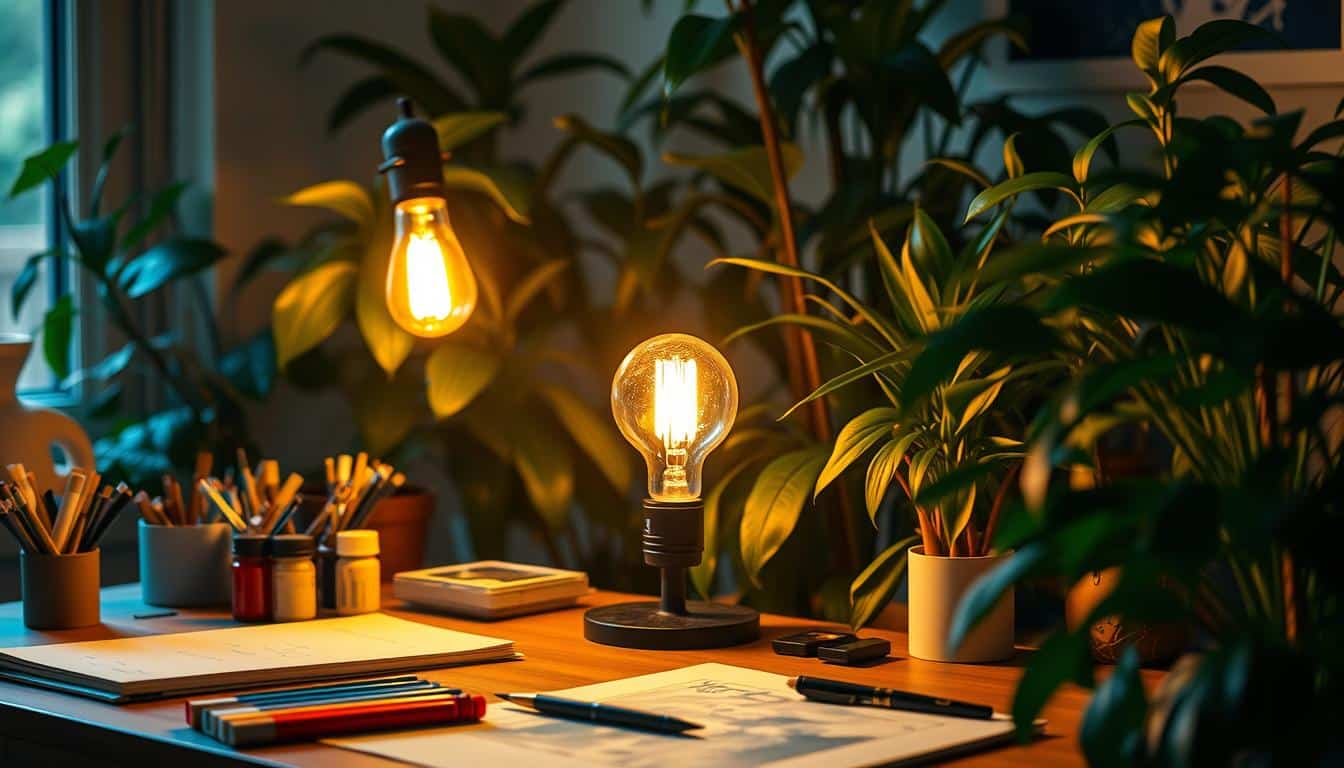
Warm lighting makes offices feel welcoming, encouraging people to connect and take short breaks. It has a cozy glow, like a sunset, that helps everyone relax. In areas meant for relaxation or conversation, use warm lighting but not where detailed work is done.
Mood, comfort, and social spaces
Warm light makes you feel relaxed and comfortable. It’s perfect for places like lounges and reception areas, making it easier for teams to relax. In break rooms, it fosters better conversations and makes employees happier during their breaks.
Using warm light in common areas signals the end of the day, helping minds rest. It makes casual teamwork seem easier and more natural.
When warm lighting can hinder task performance
Warm light is not as energizing as cool light. If used where detailed work happens, it might make you less sharp and focused. Since cool light helps with focus, warm light might not be the best in areas needing high concentration.
Warm, dim settings can make you feel sleepy, lowering your energy. For work that needs lots of focus, it’s key to have the right balance to keep productivity up.
Design tips for using warm light effectively
- Reserve warm fixtures for lounges, break rooms, and hospitality-style reception areas.
- Use dimmers and zoning so spaces can shift from cozy to brighter as needed.
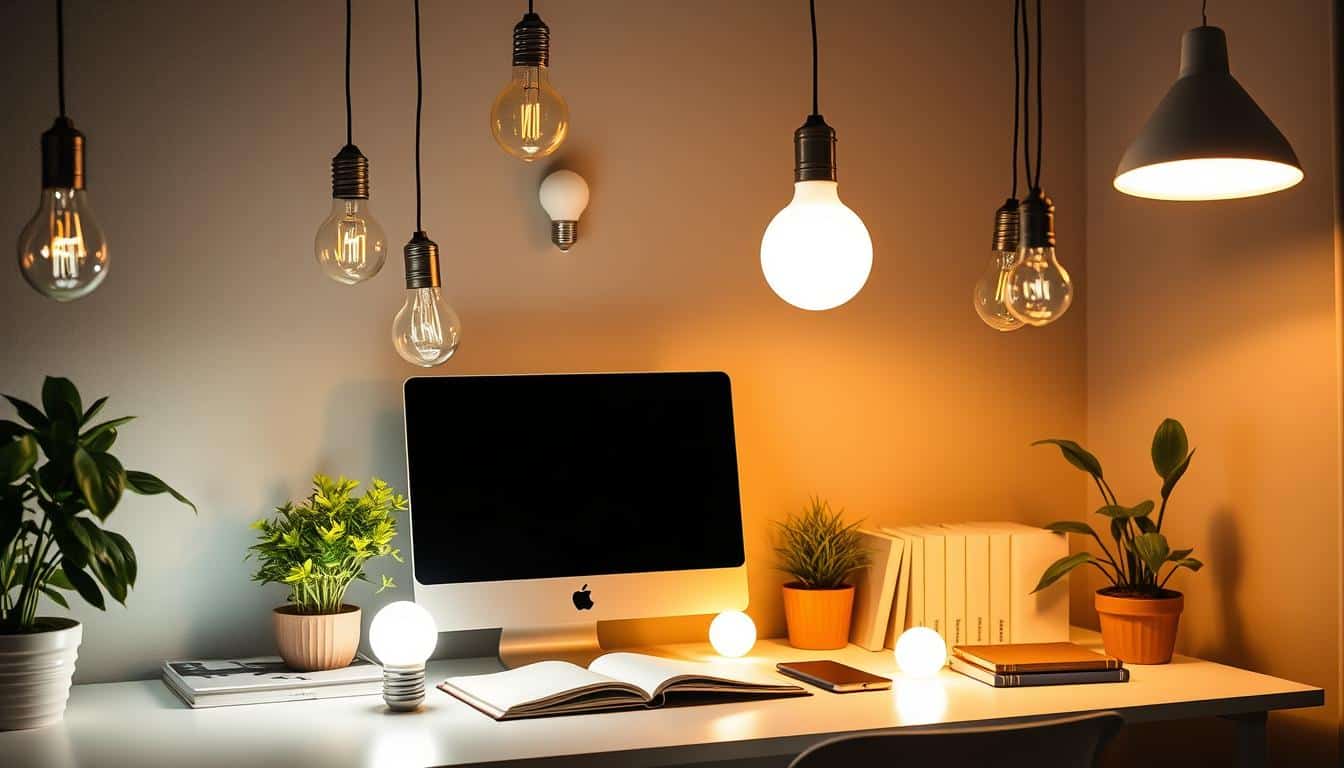
- Layer lighting: pair warm ambient fixtures with cooler task lights at workstations.
- Install adjustable desk lamps or pendants in collaborative nooks to let users control warmth.
- Choose LEDs with high CRI to keep colors vivid under warm tones and maintain visual clarity.
By following these tips, designers can enjoy the benefits of warm light without compromising work performance.
Cool lighting: boosting focus, alertness, and daytime performance
Cool, blue-leaning light boosts focus and elevates mood in offices during the day. It mimics natural daylight, aiding in tasks that need long-term focus. Such lighting makes teams feel more awake in the morning and mid-day.
Cognitive and alertness benefits of cool/blue-enriched light
Blue-enriched light helps brain function by waking up certain pathways. Studies find that cooler light, between 4,000K and 6,500K, boosts concentration and alertness. Using this light in the morning can improve daily performance and sleep quality.
Potential downsides and eye fatigue
Very bright lights can cause eye strain after long hours. Even though 7,000K light keeps you awake, it may also make you uncomfortable if you work long periods. Bad lighting setups—like too much brightness or flickering—can make this worse and distract you.
Best uses for cool lighting in offices
- Task-oriented zones such as individual desks, conference rooms, and training spaces perform well with cooler color temperatures.
- 6500K office lighting is useful for short bursts of high visual acuity; keep sessions limited and monitor comfort.
- Task lighting recommendations include adjustable fixtures that deliver 300–500 lux at the work surface and reduce glare.
- Use tunable systems to lower blue content later in the day so circadian disruption is minimized.
Practical strategies: mixing warm and cool light for optimal productivity
Mixing warm and cool lights can make offices better for different tasks and needs. Using ambient, task, and accent lighting keeps people focused or relaxed at the right times.
Tunable LEDs and circadian lighting systems
- Tunable LEDs let managers change light warmth and brightness throughout the day. They make mornings brighter and afternoons warmer and dimmer.
- Circadian lighting systems automatically adjust to help with our natural sleep and waking patterns. They use less energy and give more control than old lighting.
- Creating a schedule that matches when we’re most awake can improve focus. It also lowers the risk of sleep problems from the wrong type of light.
Task lighting and personalized control
- Allowing employees to adjust their lighting can make work easier. They can change light levels and colors to suit their tasks, reducing glare and eye strain.
- Designing task lighting to give 300–500 lux at the work surface is ideal for office tasks. This should be combined with ambient lighting for a good contrast.
- Educating people on how to use lighting controls can help. They’ll know when to choose bright light for focus and soft light for less intense tasks.
Maximizing natural light and layout considerations
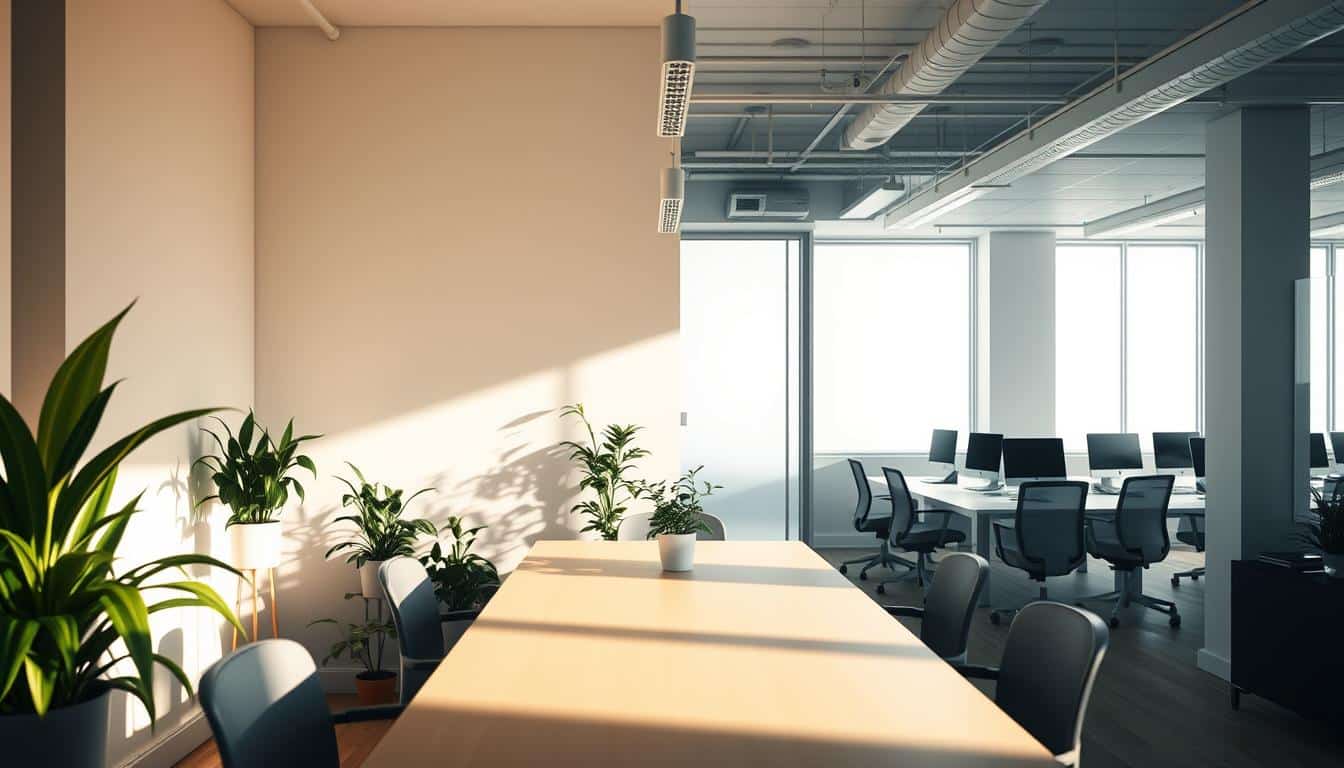
- For the best use of natural light, put desks near windows, use glass partitions, and install skylights if you can. Daylight improves mood and cuts down on electric light use.
- Planning your light layout to boost productivity is key. It should let light fill the space and provide views outside for breaks. Use blinds to manage glare.
- If there’s not much natural light, boost interior areas with blue-enriched light during the day. Later, switch to warmer lights. Keep lighting even to reduce eye strain.
Warm vs Cool Lighting for Office Productivity
This overview looks at warm, neutral, and cool light in offices. It shows how managers and designers can make smart lighting decisions. The goal is to turn research on light and productivity into real-world solutions for offices.
Comparative summary of benefits and trade-offs
Warm lighting (2700–3000K) makes lounges cozy, boosting comfort and teamwork. It eases stress and helps people work together better.
However, warm light may lower alertness at workstations. This can affect how well people do tasks that need a lot of attention.
Neutral lighting (3500–4000K) strikes a perfect balance. It’s chosen for main areas in offices because it’s good for different activities.
Cool light (5000–6500K) sharpens focus and matches natural daylight rhythms. It makes people feel more alert and focused.
But, very bright cool light can tire eyes and mess up sleep if used late. Always aim for 300–500 lux where work is done, and spread light evenly to reduce glare.
Evidence from studies and real-world implementations
Studies link color temperature (CCT) with how alert people feel. Experiments found blue-rich lights make people more alert, especially around 4000 K for concentrating.
Natural light can improve sleep, health, and work output. Adding tunable lights or more daylight leads to productivity gains.
Projects that use adjustable LEDs and personal lights show the balance between alertness and comfort. Addressing glare and flicker is crucial.
Decision framework for managers and designers
1. Figure out each area’s purpose: decide where people will concentrate, meet, or relax.
2. Choose target light levels and colors: aim for 300–500 lux at desks and pick 3500–6500K for workspaces, leaving 2700–3000K for relaxation spots.
3. Opt for adaptable lighting: use adjustable LEDs, dimmers, and personal lights to let people change brightness and color as needed.
4. Use natural light: plan the layout to use more sunlight and add lights that can make up for lack of daylight.
5. Make sure it’s comfortable: manage glare, select high-quality lights, avoid flicker, and watch out for eye complaints with high CCTs.
6. Test and learn: start with small tests, keep track of how people feel, their sleep, and work results, then adjust your lighting plan accordingly.
This approach helps compare Warm vs Cool Lighting for office effectiveness. Running tests and looking at case studies helps find the right lighting balance.
Conclusion
This final note on office lighting highlights a crucial fact: color temperature greatly influences workspaces. Cool, blue-toned light boosts alertness and focus during morning work or in detailed task areas. Warm lighting, however, increases comfort and helps in social and team spaces. Use color temperature as part of a bigger picture, which includes how bright the light is, controlling glare, and the overall visual effect.
To pick the right office lighting, follow these tips: target 300–500 lux for workspaces, choose neutral to cool color temperatures for intense focus tasks, and use warmer tones for areas meant for rest and teamwork. Use flexible LEDs and lights that adjust to our natural body clock if you can. Add personal lights and controls for workers, and make the most of natural light to save energy and make everyone feel better.
When setting up lighting, managers and designers need to find the right balance. Watch out for tired eyes with super bright lights, cut down on blue light at night, and try out small changes to see what works while asking for team input. With a good strategy, you can create a lighting setup that makes people feel good, less tired, and more productive, all while keeping an eye on energy costs and design.
Content created with the help of Artificial Intelligence.