Natural light has a big effect on how we feel and work. A study by Empire State Realty Trust on Oct 8, 2025, found that daylight improves mood, helps keep our body clock on track, lowers stress, and makes us more alert. These benefits lead to better focus and productivity in offices with natural light.
Science backs up these benefits. Research by Boubekri et al. in J Clin Sleep Med, 2014, compared workers with and without windows. Those with windows got more daylight, slept longer, and felt healthier. Daylight also helps with our brain function, daily activities, and limits health issues caused by physical problems.
Real-world designs show how valuable this can be. Steidle Building by Page Architects and research by Terrapin Bright Green reveal that smart use of daylight cuts energy costs while improving wellbeing. Tyler Thompson and Jennifer Wegner highlight that blending nature with daylight boosts mood, reduces eye strain, and increases work output.
We are now diving into how light in our workplaces can really make a difference. The aim is clear: to show how access to light and smart design can lead to better focus, health, and success in business.
Key Takeaways
- Daylight improves alertness and mood, which supports better on-the-job focus.
- Window access links to longer sleep and greater daytime activity in controlled studies.
- Daylighting strategies can reduce energy use while enhancing natural light office productivity.
- Combining biophilia with daylight amplifies benefits for cognition and well-being.
- Practical design moves—sensors, low panels, and glass partitions—help deliver consistent workplace lighting benefits.
How Natural Light Affects Focus in Office Spaces
Natural light plays a huge role in how well people work. Studies show that being exposed to sunlight can change how alert and focused we are. Experts have found several ways to explain why more daylight helps us concentrate better at work.
Overview of the connection between daylight and cognitive performance
Daylight can help you sleep better and feel less stressed. This happens because it keeps our internal clocks in check. When we sleep well, we’re more alert and creative during the day. Research shows that workers with more light exposure feel more energetic and think more clearly.
Key mechanisms: circadian rhythms, alertness, and visual comfort
The circadian rhythm plays a big part in this effect. Sunlight in the morning tells our bodies to stay alert and helps avoid feeling tired later on. This idea is used a lot in designing workplaces with our biological clocks in mind.
Being alert is tied to how light affects our biology. By planning where windows go and when we’re exposed to sunlight, designers can help us feel awake.
It’s also important that light feels good to our eyes. Natural light doesn’t tire our eyes out like artificial light does. When there’s no glare and we have a nice view, workers feel less tired and can focus better on their tasks.
Summary of evidence from controlled studies and workplace research
Lots of studies agree on the benefits of daylight. They’ve found that the right light can improve how long we sleep, how active we are during the day, and how good we feel overall.
Getting sunlight in the morning and throughout the day is key to staying focused. This shows that different ways daylight helps us are working together to keep us concentrated.
Evidence from Research: Performance, Sleep, and Well-being
Studies show that natural light in workplaces leads to better outcomes. Researchers compare employees with or without window access. They find those near windows are more alert, active, and report better health. This summary looks at the work linking natural light to better focus, rest, and overall well-being.
Findings on productivity and attention from daylight exposure
Research shows that workers in offices with natural light feel more alert and creative. While many studies don’t focus on task speed or accuracy, they note fewer distractions and enhanced teamwork in these spaces. Cases of office updates to increase daylight share a rise in job satisfaction, helping employees maintain concentration.
Impact on sleep quality and downstream effects on daytime focus (actigraphy results)
Studies using actigraphy show that windows impact daily patterns of light exposure and activity. Workers with windows get more light during the day and evening, are more active, and sleep longer. These findings match up with less daytime sleepiness and fewer complaints about poor rest.
Psychological and physical health outcomes linked to windows and daylight (SF-36, PSQI)
Surveys confirm what objective data shows. Comparing workers with and without windows, there are clear benefits in energy and fewer physical limitations for those with access to daylight. Indoor workers often report worse sleep and more disturbances, while those with views and daylight show less anxiety and take fewer sick days.
This chain of evidence shows a clear link: more daylight leads to increased activity and better sleep, which then improves health scores. These insights help guide decisions to make workplaces better with more windows, benefiting worker health.
Design Strategies to Maximize Natural Light for Focus
Good daylighting begins with simple layout choices and integrated systems. Combining automated dimming with manual controls helps keep people comfortable. At the same time, it ensures that artificial lighting supports different tasks. Adding tunable white fixtures and daylight controls makes light consistent throughout the day, supporting natural body rhythms.
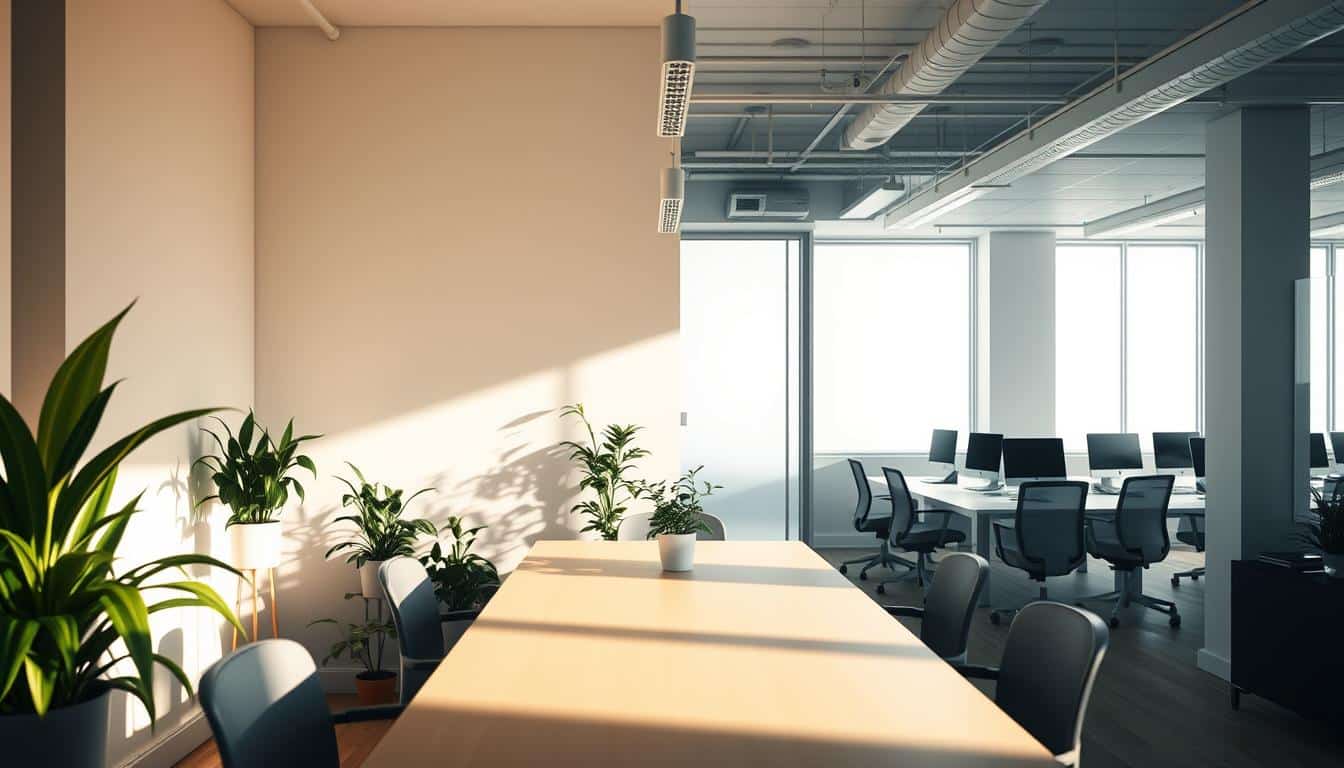
Set up work areas near the building’s exterior. This ensures that people spend most of their day in natural light. Put meeting rooms, storages, and central areas in the middle to maintain daylight for everyone. Doing this makes sure that bright areas stay bright without too much glare.
Choose interior dividers that let light through. Keeping partitions low, about 42 inches, helps light spread while keeping open views. When privacy is important, frosted glass and blinds can be used. This helps keep spaces bright without losing privacy.
Opt for glass instead of solid walls when you can, especially where privacy isn’t a big concern. This allows daylight to fill the space and keeps everyone visually connected. Pairing clear partitions with good sound design ensures privacy without losing the benefits of natural light.
Add nature to your office design to enhance the effect of daylight. Position plants near windows to create natural views and improve the office climate. This approach helps lower stress and makes the most of natural light, without blocking it.
- Daylight controls sensors: link sensors to zone lighting for automatic dimming based on real daylight levels.
- Workspace layout: prioritize exterior-facing desks and minimize deep-plan workstations without atria.
- Interior elements: enforce low panel heights 42″ and use glass partitions daylight to move light through the plan.
- Biophilia and atria: add plants, living partitions, and narrow atria to activate views and improve airiness.
Narrow atriums and light wells are great for bringing light deep inside large spaces. They not only brighten up the area but also act as visual highlights. It’s crucial for designers to measure daylight properly and combine atriums with adjustable lighting to meet everyone’s needs effectively.
Testing and measuring light in mockups is key for successful implementation. Aim for daylight factors between 2% and 6% for workspaces, then adjust your lighting controls accordingly. Sometimes, small changes like moving a desk or lowering a partition can really improve how bright and focused an area feels.
Practical Considerations and Implementation Challenges
Introducing daylight into an office space comes with questions about comfort, the weather, and expenses. Good planning can maximize the benefits of natural light while minimizing unwanted glare and harmful sunbeams. Post-occupancy evaluations adjust these systems based on what people actually need.
Managing glare, UV exposure, and visual comfort
To deal with direct sunlight, install adjustable blinds, exterior overhangs, and glass that’s either fritted or frosted. This keeps brightness without the harsh glare. For screen viewing, use window treatments like films or louvers for comfort. Choosing glass with low iron content and coatings that filter UV light reduces risks from artificial light and keeps fabrics and gear from fading.
Seasonal and geographic variability in daylight
The amount of daylight changes with the seasons and where you are, so designs need to consider both the low light of winter and the bright light of summer. Adding daylight-responsive lighting and adjustable fixtures helps during shorter days. To catch the low winter sun, think about installing skylights or building atriums.
Energy efficiency trade-offs and measured savings
The energy savings from using daylight smartly depend on the setup of controls and the type of glass used. Systems that dim lights based on natural light and automatic window shades can greatly reduce electricity use. However, the wrong type of glass can increase the need for air conditioning, so it’s crucial to choose glass that works with your heating and cooling systems to keep things balanced.
Quick wins for office managers
- Desk placement: move high-focus desks within 10–15 feet of windows and rotate seating to share daylight access for quick office daylight wins.
- Living partitions and plants: use potted plants or living screens to add biophilia while keeping light porous.
- Light-access policies: ban permanent window blockages, schedule meetings in bright zones, and permit flexible seating near windows.
- Low-cost changes: lower panel heights to under 42 inches, swap opaque fronts for glass, add task lamps with tunable white output, and fit simple sensor dimmers.
Keep an eye on how comfortable people are and if they complain about glare or being too hot or cold. Where possible, use surveys or actigraphy to see how changes affect sleep and overall wellbeing. Even minor adjustments can have noticeable benefits without too much expense or risk.
Conclusion
Studies, design experts, and real-world examples all agree that daylight and nature in offices boost alertness and sleep. Better sleep and wellbeing lead to improved thinking skills. Workers take fewer sick days and feel happier with their jobs when there’s more natural light.
Combining architecture and technology is key for the best lighting at work. Think about where windows go, use glass walls, and control the light with smart systems. Also, adding plants and making sure there’s a good view can make the office even better while keeping it comfortable.
When offices use natural light smartly, they save energy and cut costs. Small steps like moving desks and adding plants can make a big difference quickly. Bigger changes, like new windows or smart lighting systems, add up over time. In the U.S., focusing on daylight from the start can make offices healthier and more efficient.
Content created with the help of Artificial Intelligence.