Light does more than just help us see; it plays a key role in our feelings and thoughts. Studies have found that certain cells in our eyes connect with brain areas that manage our sleep, mood, and how wide our pupils are. This means the type of light we’re exposed to can affect our daily rhythms and how we feel at the moment.
Daylight boosts creativity, happiness, and sharp thinking in our everyday lives. Unlike harsh artificial light, natural light without glare is best. Yet, artificial light is useful when there’s no sunlight. The color and timing of light, like cooler lights for focus or warm lights for relaxing, play a big part in our spaces.
On a chemical level, light changes how much melatonin, serotonin, and dopamine we have, affecting our energy and focus. Getting bright light in the morning can make us more alert by lowering melatonin. But, blue light at night might make it hard to sleep, affecting our performance the next day. By understanding light’s effects, we can make smarter choices in lighting to boost our well-being and productivity.
Key Takeaways
- ipRGCs are central to non-visual responses: they connect light to circadian rhythms and mood.
- Natural, glare-free daylight generally improves mood, creativity, and cognitive performance.
- Color temperature matters: cool light tends to increase alertness, warm light supports relaxation.
- Timing and intensity of light shape sleep–wake cycles; morning light boosts alertness, late blue light can disrupt sleep.
- Practical lighting choices—layering, glare control, and timed exposure—can enhance focus and well-being.
How Lighting Impacts Mood and Concentration
Light shapes our daily lives in ways we often don’t notice. It helps us stay alert, focused, and in a good mood. But bad lighting can mess with our sleep, stress us out, and make it hard to do tasks.
Why this topic matters for well-being and productivity
Workplaces and homes that have good natural and electric lighting are better for us. Research in hospitals and offices proves that daylight and non-glare lights increase comfort. And more comfort means more productivity at work, fewer errors, and happier employees.
People who work shifts or travel a lot suffer when their light-dark cycles get mixed up. Our bodies have an internal clock that gets confused. When this happens, it affects our hormones, can make us feel moody, and drains our energy.
Overview of evidence from neuroscience and behavioral studies
Studies on brains and behavior show that light quickly affects our brain chemicals. Bright, cool light makes us feel more awake and think clearer by changing our serotonin, dopamine, and melatonin levels. These findings link lab research with real-life benefits.
Different studies agree on what kind of light is best at certain times. Cool, bright light keeps us sharp in the middle of the day. Warm, soft light is good for being social and creative. And natural light without glare boosts our creativity and makes us less tired.
- Animal studies and brain research trace how light affects our mood centers.
- Psychology studies show how timed light exposure changes our hormones and attention.
- Architecture uses this knowledge to design spaces that are good for our mental health, help us save energy, and make us feel better.
When design, brain science, and behavior studies align, the evidence is clear. Light plays a key role in our mental health and how we function daily. Using smart systems that mimic natural light patterns can improve our mood, well-being, and work performance.
Biological Mechanisms: How Light Reaches the Brain and Changes Mood
Light enters the brain through the eye’s layers and leads to big and small changes in our body and mind. It involves three main types of photoreceptors—rods, cones, and melanopsin-expressing cells. These cells help us react to light, affecting our alertness and body rhythms. We’ll look at the eye’s key parts, how they control our daily cycles, and how light links to our feelings.
Retinal photoreceptors and ipRGCs
Rods and cones help us see and also send signals that affect how we feel. A few special cells in the retina, called ipRGCs, are crucial for non-visual responses to light. These cells come in several types, each affecting our body in different ways based on their melanopsin content.
Some ipRGC cells focus on areas controlling our daily rhythms and mood changes. Others manage pupil size or send information to visual and mood-related brain regions. This connection between eye cells and mood is key to understanding how light influences our feelings.
Circadian photoentrainment and the suprachiasmatic nucleus
The suprachiasmatic nucleus acts like our body’s main clock. It uses light signals from ipRGCs to set our daily schedule, like when to sleep or wake up. The timing of light exposure can shift this schedule, changing our body’s functions.
This master clock connects to parts of the brain that affect our mood. Wrong signals can mess with our immune system, brain chemicals, and new brain cell growth. This shows how changes in our daily light exposure can impact our feelings and actions long-term.
Direct, non-circadian neural pathways
Light affects us quickly through special pathways to parts of the brain that handle emotions. Turning on ipRGCs can quickly change how alert we feel, our heart rate, and emotional brain activity. These fast changes happen without needing to adjust our internal clock.
Certain eye-to-brain pathways can make us feel either down or uplifted, based on which circuits are activated. Other pathways influence our mood in different ways, offering clues for using light treatment to improve mental health without messing with our body clock.
- Rods/cones supply image-forming context that shapes ipRGC signaling.
- ipRGCs function as a hub connecting ambient brightness to both SCN-mediated timing and fast limbic responses.
- SCN photoentrainment explains slow, systemic shifts; direct pathways explain rapid mood changes.
Different inputs from the retina and distinct brain circuits show how light affects our mood, focus, and feelings over time.
Color Temperature and Spectrum: Blue Light, Warm Light, and Their Cognitive Effects
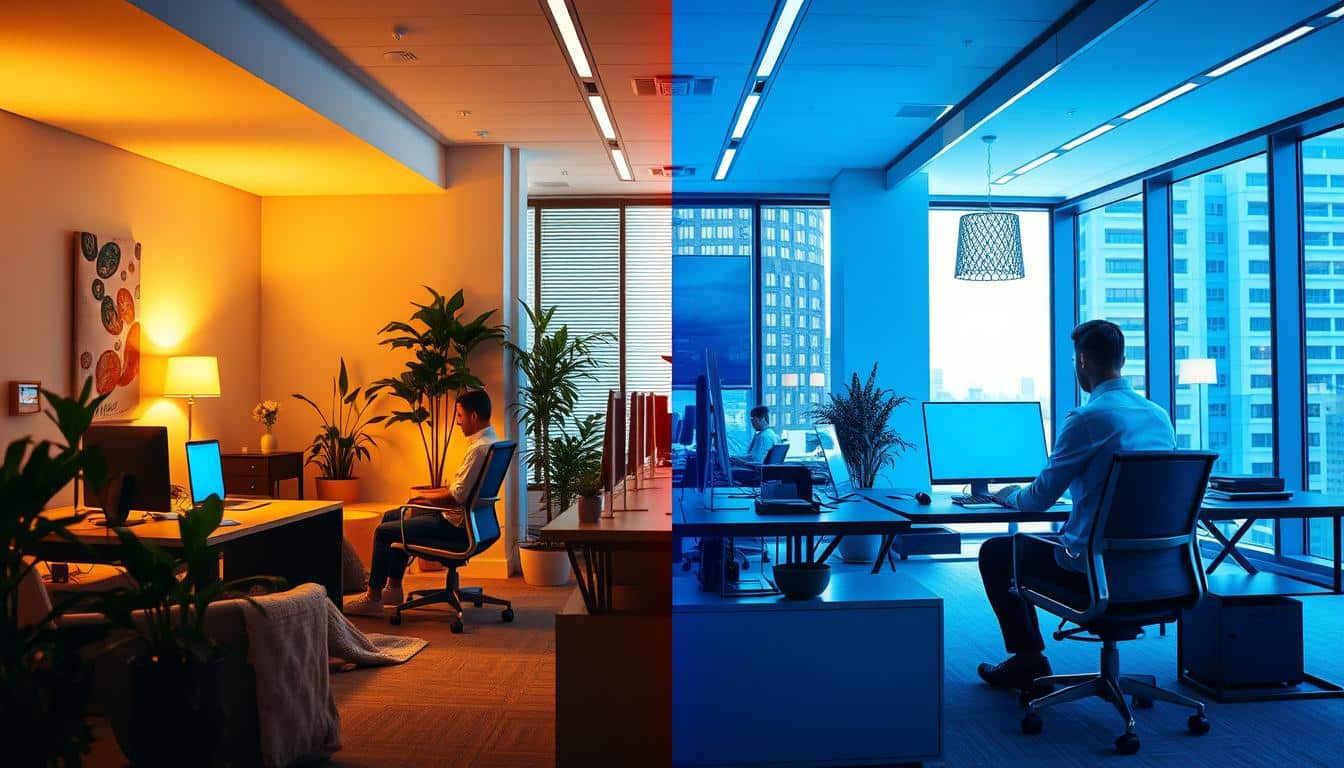
The colors and spectrum of light affect our emotions and thoughts. Daytime lighting with lots of blue can make us more alert and awake. On the other hand, warmer tones help relax us and can enhance creative thinking. When planning spaces, it is important for designers, doctors, and building operators to consider how light impacts mood and activities.
Blue light and alertness
Studies show that light in the 470–480 nm range activates special cells in our eyes. This activation lowers melatonin, increases body temperature, and helps us feel less tired. In workplaces, using lights with more blue or daylight-like lamps helps people stay focused, especially in the morning and afternoon.
Warm light for relaxation and creativity
Light with warmer colors makes spaces feel comfortable and reduces stress. In places like homes and restaurants, using lamps with lower color temperatures encourages people to relax and think more freely. Architects often suggest using warm lights in areas meant for resting or creative tasks.
Wavelength-dependent and context-dependent responses
The way light impacts us can vary by species and setting. Studies on animals suggest blue light boosts alertness, while green light might help with sleep. The true effect of light’s color on us can change depending on its brightness, when we’re exposed to it, and how it activates different receptors in our eyes. So, how light influences our cognition can differ based on the situation.
- Morning/task zones: favor blue-enriched or daylight spectra for alertness and performance.
- Evening/relaxation zones: shift to warmer spectra to reduce melatonin suppression and support sleep readiness.
- Hybrid spaces: use layered fixtures or tunable systems to balance spectral lighting mood across activities.
Intensity, Duration, and Timing: Circadian Rhythm, Sleep, and Daytime Concentration
Light changes the brain through brightness, timing, and length of exposure. These elements influence our body and behavior through special cells in our eyes and a brain area called the suprachiasmatic nucleus. It’s important to balance the need for light with its effects on sleep and mood.
Light intensity and irradiance effects
Brighter light makes us more alert. Research shows it can increase body temperature and heart rate and lower melatonin. These changes help us stay awake at work. However, light also affects how we feel. So, designers must choose the right level of brightness for each task without going overboard.
Timing of exposure and circadian phase shifts
The timing of light exposure affects our internal clock. Morning light makes us more alert and shifts our clock forward. But, light at night does the opposite. It makes it harder to sleep and can spoil the next day’s mood. The internal clock uses light signals to control stress and desire.
Duration and chronic exposure consequences
Quick, well-timed light exposure sharpens focus. But, too much or at the wrong time is harmful. Studies in animals show that messed up light schedules can make them act depressed and change brain growth. Long-term, it can weaken the immune system and stress regulation.
It’s best to mix these ideas in practical ways.
- Use bright, blue-enriched light in the morning and during busy work to stay alert.
- Avoid bright, blue light in the evening to help sleep and keep your internal clock steady.
- Quick, bright light can help focus, but don’t do it too much to avoid long-term mood issues.
Practical Lighting Strategies to Improve Mood and Focus in Home and Office
Good lighting combines science with simple habits. Think about your daily patterns, what you need for tasks, and how comfortable you are. Making small changes can greatly improve mood and focus. It also makes spaces welcoming.
Use natural daylight effectively
Put desks close to windows to get the benefits of natural daylight. It improves alertness and mood. Use sheer curtains or shades that diffuse light. They soften direct sunlight without making the room dark.
For rooms facing north or south, change where you sit during the day. This helps manage light exposure and avoids too much heat.
Design with layered and tunable lighting
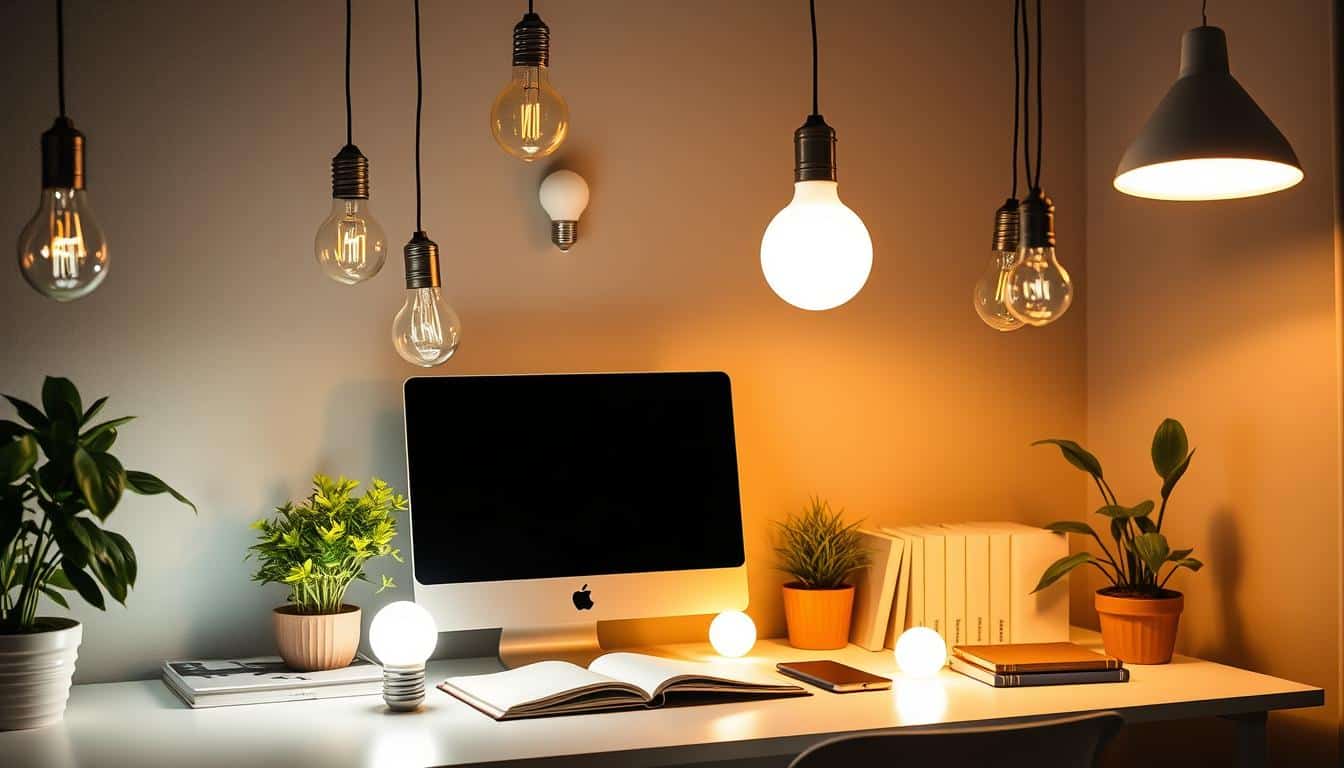
Using different layers of lighting creates spaces for various activities. Mix ambient ceiling lights, task lamps, and accent lights. Each type can be adjusted separately. Choose lights that you can dim or change. This lets you adjust light color and intensity as the day goes on.
Choose color temperature by activity
Pick the right color temperature for the job. Cool, bright light is best for tasks needing focus. Warm, soft light is good for meetings, resting, or relaxing at night. Make sure the light colors in one area match to avoid discomfort.
Reduce glare and visual discomfort
Set up your screen and lights to lower reflections and avoid hurting your eyes. Use items with matte finishes, frosted diffusers, and task lamps that block glare well. To manage light without losing daylight, add blinds or outside shades.
- Position work areas to avoid direct light and reduce glare.
- Choose task lamps that dim and adjust to focus light where you need it.
- Pick bulbs that show true color and give off steady light.
- Set up lighting to reflect your energy in the morning and need for calm at night.
- Manage glare with window and surface treatments to keep a glare-free workspace.
Keep a simple lighting plan. Use bright, blue-toned light in the morning and softer, warmer light later for chilling out. Changing lights based on work and mood keeps you comfortable and focused.
Design Considerations, Tools, and Technologies for Evidence-Based Lighting
Designers need handy tools and clear rules for modern lighting. They should aim for goals like wakefulness, comfort, and clear sight for tasks. Judge lighting using spectral data and melanopic EDI, besides just lux.
Circadian lighting systems and smart controls
- Opt for systems that change in spectrum and intensity during the day. This helps keep our body clock on track and lowers stress.
- Set up automation for bright/cool light in the morning. Use warm/dim light in the evening. This is done with scene scheduling and detecting if someone is there.
- Choose controllers that monitor melanopic light. Ensure they work well with building systems. This keeps lighting consistent in workplaces, schools, and health facilities.
Silent substitution and research tools
- The silent substitution method lets us separate the effects of melanopsin or cone responses. It’s useful for research and checking if lighting works as expected.
- Work with scientists using light pairs and precise tools. This helps study eye reactions and melatonin.
- Portable devices are good for using research out of the lab. They can help in designing and in medical studies.
Selecting fixtures and bulbs for color rendering and tunability
- Choose CRI ≥90 for places needing true color, like healthcare and shops.
- Go for adjustable white lights between 2700–6500K. It lets designers mimic natural light cycles.
- Buy quality devices that dim and reduce glare. It makes looking at things easier.
- For home use, consider brands like Philips Hue. For larger areas, Lutron’s adjustable systems are a good match.
Considerations for special populations and environments
- Adjust lighting for the elderly by making it brighter. It helps with their vision.
- Use strong light as treatment for those with mood issues, following medical guidelines.
- Create lighting solutions for night workers and hospital patients. It helps their body clock and healing.
- For research or studies on animals, choose devices that can precisely control light. This includes fixtures able for silent substitution.
Procurement notes: In your list, include CCT range, CRI, adjustability, and compatibility needs. Use simulations, light measurements, and controls to check if things are working as planned before full use.
Conclusion
Research reveals that light affects our moods and ability to focus in various ways. Our eyes have rods, cones, and cells with melanopsin that all respond differently to light. This means that the color, brightness, and timing of light can change how we feel and think. When it comes to lighting and our mental health, details are key even though basic rules are helpful.
Sunlight is great for keeping us happy every day. Experts suggest letting in as much natural light as possible, without causing glare. During the day and for work, bright and cooler light is best. But in the evening, softer and warmer light is recommended. Having lights that you can adjust for different activities can help prevent eye strain and make spaces more enjoyable.
To continuously benefit from light in improving our mood, managing its duration and timing is as important as its color and brightness. High-quality lighting that minimizes glare and smart systems for smooth light changes are good investments. By following these tips, designers, bosses, and homeowners can boost focus, improve sleep patterns, and enhance well-being. Plus, researchers will keep exploring specific advice related to our eyes’ light receptors through ongoing studies.
Content created with the help of Artificial Intelligence.