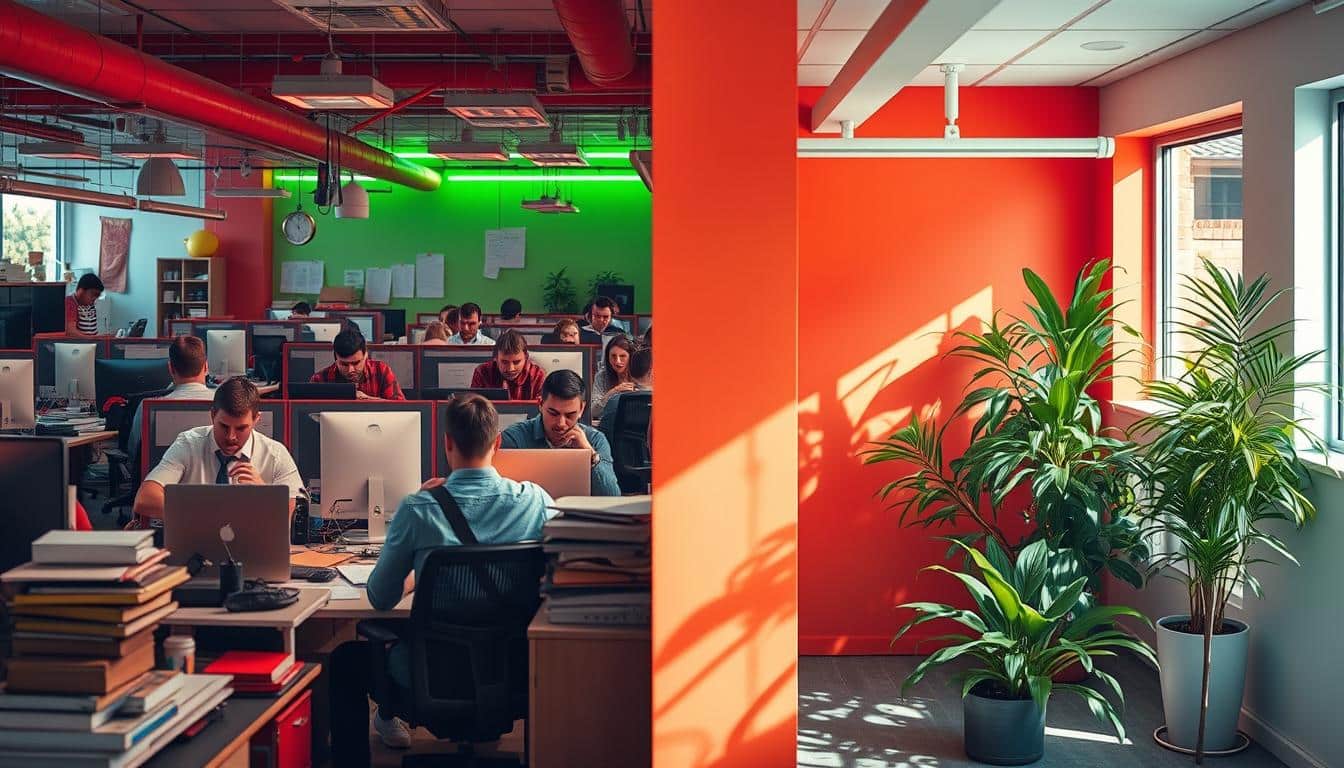
Color plays a big role in how we feel and work. The University of Texas found that certain office colors can change our mood, spark creativity, and help us focus. Since we spend a lot of time at work, the colors around us are really important for our happiness and how well we do our job.
Dull colors like grey, beige, and plain white can make people feel down and less productive. On the other hand, thinking carefully about color can turn the office into a better place. The right colors can make us feel happier, work better, and help build a strong workplace culture. But, the wrong choices can lead to people feeling disconnected.
This article talks about how colors make us react emotionally and physically. It gives tips on choosing the best color schemes for different work activities. It also talks about the best ways to put these ideas into practice in U.S. offices. You’ll learn how to make your office’s design help meet your business goals and see the effects through easy-to-follow metrics.
Key Takeaways
- Color is a powerful nonverbal signal that affects mood, focus, and teamwork.
- Office design colors influence employee wellbeing and measurable productivity and color outcomes.
- Grey, beige, and sterile white can harm morale; considered palettes support retention.
- Use color psychology office principles to match hues to specific work functions.
- Plan changes with metrics and phased rollout to measure workplace color impact.
How Colors Affect Mood in Office Environments
Color psychology shows how colors impact our feelings without us knowing. Designers and marketers use color to influence office moods. They aim for specific feelings, like calmness in blue rooms or energy in warmer spaces.
Research connects certain colors to body changes. Blue can make our hearts and breathing slow down, perfect for focus areas. Red boosts heart rate and breath, fitting for lively spots but in small amounts. Yellow increases alertness and happiness, though too much can be too intense.
The setting is key. A fully blue office might seem cold without warm colors, and too much red or yellow can be too much. How colors are used and mixed affects how we feel about them. This determines if colors help or hurt how we feel at work.
Real-life examples support this. People say they feel more creative in colorful places like coffee shops or parks. Bringing these elements into an office can spur creativity and help with focusing on tasks.
- Match hues to activity: focus rooms benefit from muted blues and greens.
- Use accents for energy: small doses of red or yellow add urgency without distraction.
- Consider lighting and brand identity when choosing office mood colors.
- Account for neurodiversity and individual preferences to support workplace wellbeing.
Using color wisely is a smart move for design teams. Careful selection of colors and where they’re used affects our reactions. It helps make a workspace match its purpose and brand goals.
Science and Psychology Behind Color Perception in Workspaces
From the first moment, color shapes how we feel and act in a space. Studies show colors’ hue, intensity, and position affect our initial reactions. Designers who get these basics can make spaces that help with work and wellness.
How color triggers physiological and emotional responses
Angela Wright says color sparks instinctive feelings, like calm or alertness. For example, blue helps focus, green eases stress, red boosts energy, yellow encourages creativity, and orange seems friendly.
Studies prove these effects. Blue rooms can relax us and help concentrate. Red can make us work faster on active tasks. Knowing this lets us pick colors that fit what activities a room is for.
Role of saturation, brightness, and context
Bright, saturated colors wake us up. Soft, dull colors calm us down. A vibrant blue invigorates, while a soft blue soothes. These differences are crucial when choosing paints or decorations.
Light affects how we see color. Northern light brings out cool tones, and southern light adds warmth. Always test colors in the room’s light before making a final choice. Too much of a bold color might be too much for our eyes. Neutrals give a break and balance sensation.
Individual differences and neurodiversity considerations
Everyone reacts to color differently. Neurodivergent folks might find bright yellows and reds too much. Softer shades like beige or light grey often work well for a variety of minds.
- Zoned color strategies let employees choose settings that fit tasks and sensory needs.
- Adjustable lighting and movable soft accents create flexibility for diverse preferences.
- Inclusive planning rooted in neurodiversity and office design reduces sensory overload while keeping functional variety.
Blue and Green: Colors That Support Focus and Calm
Colors play a big role in our work environment. Cool colors like blue and green can help calm us and make us think better at work. They help make spaces where people can focus, work together, or have a quiet time alone.
Blue as a productivity enhancer
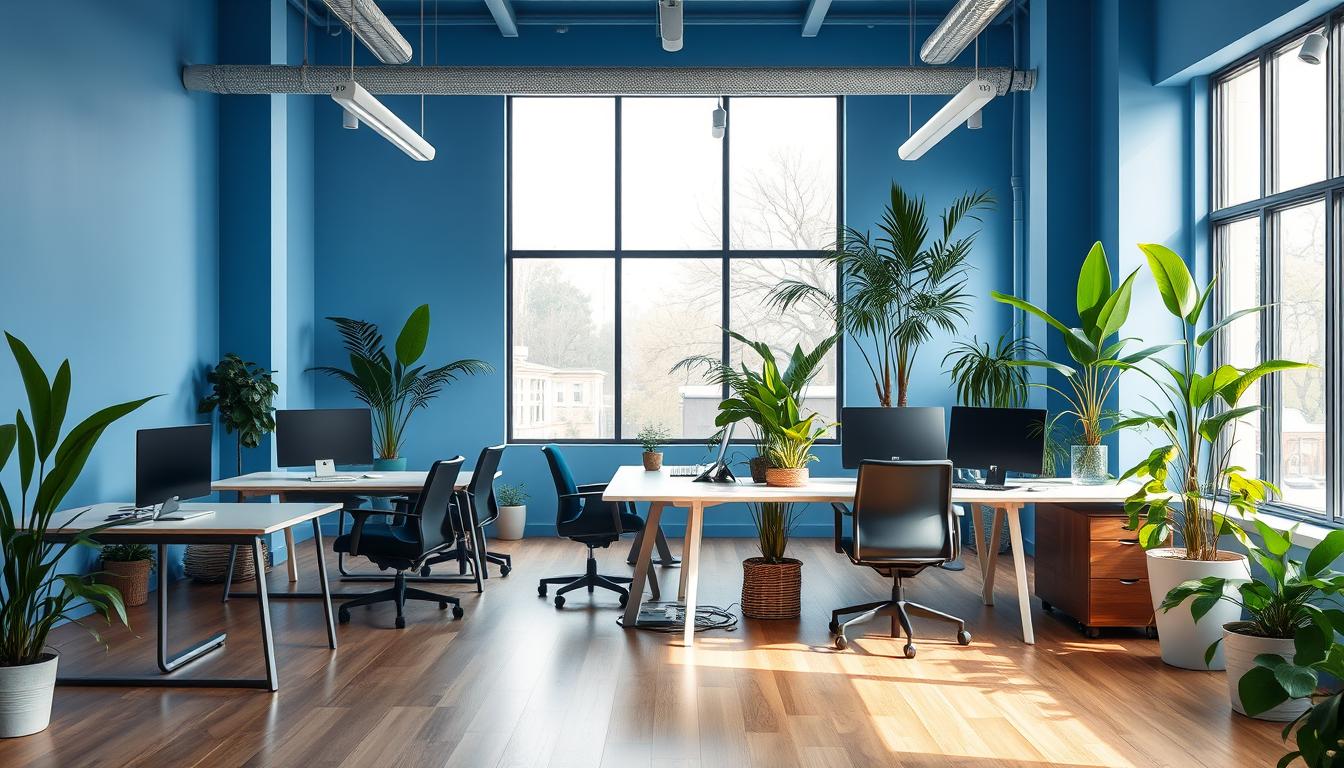
Blue helps lower our heart rate and keep us focused on tasks that require a lot of thought. It is great for teams working with data, finances, or long detailed reports. Using blue as an accent color can help increase productivity without making the space feel too cold.
Adding small touches of blue near workstations helps keep attention sharp. It makes sure the space feels lively without being too distracting.
Green as restorative and creativity-supporting
Green helps reduce strain on our eyes and relieves stress by reminding us of nature. It’s often used in places designed for breaks, creative work, or personal desks. This color boosts creativity in the office.
Including elements like plants, wood, and soft green fabrics can make this effect stronger. They also help with sound and air quality. Green is best used where people take breaks and come up with new ideas.
Combining cool tones for balanced work areas
- Blue and green together make for calm and flexible spaces that keep focus high without being boring.
- Adding neutral colors like warm grays or off-white helps blend focused work areas with places to relax and socialize.
- Always test colors in the actual lighting of the space and choose soft or moderate shades for areas used all day.
By following these tips, you can create a workplace that helps people stay focused and be creative. With small changes and flexible designs, teams can adjust the color setting according to the task and time of day.
Warm Colors: Energizing Effects of Red, Yellow, and Orange
Warm colors can change how we feel and act in offices. They encourage us to move, brighten our spirits, and help us get along better. Here, we cover how to use red for energy, yellow for creativity, and orange for teamwork. We also offer tips on where to put these colors and when to use them less, for a balanced and happy workplace.
Red for urgency and high-energy spaces
Red makes you more alert and increases your heart rate. It’s perfect for areas where you need to move a lot or make quick decisions. Add touches of red in seating, an accent wall, or artwork to signal importance but not overwhelm.
- Softer reds or small details are good for critical areas and teams working at night.
- Keep quiet areas free of too much red to avoid stress and eye strain.
Yellow as a creativity catalyst
Yellow brings a sense of hope and sparks your brain. It’s great for creative spots like studios and brainstorm areas. Use bright yellows for short-term spaces and softer yellows for bigger areas.
- Add yellow in accents like chairs or art to inspire new ideas.
- Avoid too much bright yellow in places where it may cause discomfort.
Orange for approachability and teamwork
Orange is welcoming and builds trust, making it easier to work together. It’s good for shared tables, comfy seats, or welcoming spots to start conversations.
- Mix orange with calm colors or cool hues to keep things balanced.
- Pick softer oranges for areas you’ll be in longer and brighter oranges for fun spaces.
Neutral Palettes and Accent Strategies for Balanced Offices
A neutral office palette creates a calm and together feel. It makes open areas seem bigger and more organized. Neutrals help different areas in open offices blend smoothly. Choose soft whites, warm grays, and muted beiges. They support activities without demanding attention.
Neutrals do more than just look good. They lower how much we take in with our senses, helping us focus. They make it easy to move from working together to working alone. Try them on big surfaces to see how they look in the whole room.
Purpose of neutrals in open-plan and mixed zones
Neutrals work well when different areas are close together. Using the same neutral colors lets designers add splashes of color. This can be in meeting pods or chill-out zones. It makes finding your way easier and keeps the office feeling peaceful.
Accent walls, furniture, and fixtures as low-risk interventions
Adding bold colors is easy with accent walls and movable furniture. Options like a painted wall or colored panels can mark different areas without big changes. Use things like covers, lamps, and art for quick updates. These can reflect the season or brand changes.
- Put bright colors in brainstorming areas and soft blues where concentration is needed.
- Changing cushions and lampshades can update colors without spending a lot.
- Use brand colors in the entrance but stick to neutrals in workspaces.
Lighting interaction with neutrals and accents
Light and color shape how we feel in a space. Daylight changes how neutrals look; cool grays might look bluer in north light, warmer in the south. Check your colors in both bright and dim light to avoid surprises.
With colored lights, you can change the vibe as needed. Adjustable lights let you change the feel for events or work. This lets you keep neutral colors but still mix up the mood without new paint.
Designing Color by Function: Matching Hues to Work Activities
Begin by understanding how each space is used by teams. Look into when and where people meet, concentrate, or relax. Let these insights shape color choices that boost task effectiveness instead of just following trends.
Think about what each industry needs for its color schemes. Creative sectors might enjoy vibrant touches in shared areas. Meanwhile, law and finance might prefer more toned-down colors in their furnishings. Make sure colors match the function of the space, not just how they look.
Analyzing work functions before choosing palettes
- List core activities for every zone: focused work, collaborative sessions, client reception, breaks.
- Note lighting, acoustics, and furniture that affect perception of color.
- Test small areas before rolling out wide changes to confirm effects on mood and productivity.
Color schemes for meetings, quiet focus, and social areas
Choose meeting room colors that support both analysis and creative thinking. Combine cool blues that help focus with warm yellows to boost creativity. This mix makes transitioning from reviewing data to brainstorming smoother.
Pick blues and greens for areas meant for focused work. These colors help reduce stress and prevent eye strain during lengthy tasks. Use soft contrasts and stay away from bold colors near computer screens.
Create social and breakout spaces that feel welcoming and calm. Use muted greens or soft purples to soothe guests. Include orange or warm hues to foster easy conversations and teamwork.
Brand alignment and cultural signaling through color
Align color schemes with your brand while considering psychological impacts. For bold brand colors, use them in areas like reception to make a memorable impact. In main workspaces, opt for soothing tones to keep attention sharp.
Select colors that mirror your company’s core values, whether it’s trust, creativity, or reliability. Thoughtfully chosen colors can strengthen your culture and clearly communicate your values to both staff and visitors.
Measuring Impact and Implementation Best Practices
Start by setting clear goals and using simple measures to see changes. Measure the impact of color changes using surveys, attendance, productivity logs, and scores on meeting effectiveness. Combine numbers and stories to get the full picture.
Choose a few key metrics for office redesign that link to work results. Look at task times for analysts, creative output counts, how often people work together, and staff staying on. Get baseline data before changing anything to compare results correctly.
- Employee satisfaction surveys and brief pulse checks.
- Absenteeism and turnover rates for different areas.
- Key performance indicators like task completion time and quality of work.
Start changes slowly to avoid too much disruption. Try simple updates like new paint, swapping furniture, or changing lights first. Create test areas so teams can try changes without interrupting their work.
Preview changes with 3D images, samples, and temporary colors. Plan updates when they won’t disturb work, especially for people who split their time between home and office.
- Set up test areas for three months to see what people think.
- Try out new furniture arrangements before fully repainting.
- Work with facilities and IT teams to avoid work stoppages.
Create spaces that everyone can use by having different types of areas. Have quiet places for solo work and bright areas for group work. Let people adjust their lighting and screens to be comfortable.
Include measures of how easy and comfortable spaces are to use when you design. Keep checking and adjusting as team needs change. Work with design experts for regular checks and to understand the data on office redesign.
Write down what you find and tell the key people involved. Use what you learn to make bigger changes, try new pilots if necessary, and expand what works to the whole office.
Conclusion
The conclusion of this workplace color discussion is important. Color is more than just decoration. It is a strategic tool. It shapes how we feel, how well we work, and the overall culture at work. Colors like blue and green help us focus and stay calm. Warm colors such as red, yellow, and orange can make us feel more energetic and creative. Using a mix of neutral colors with some bright accents can help stimulate our brains just right. This mix offers a good setting for various work tasks.
Let’s sum up how color psychology can be used in the workplace. Leaders and designers can start by looking at the type of work being done. Then, pick color palettes that best fit those tasks. It’s also smart to choose colors that go well with the company’s brand and how the office is lit. To make changes easier to handle, try adding new colors on one wall at a time, with some furniture, or through plants. Don’t forget to include natural elements; they’re great for our mental health.
Tracking the impact of color changes can be straightforward. Use employee surveys, check how often people miss work, and look at performance numbers. These actions can provide clear insights. The lessons learned here show that choosing the right colors isn’t just about making an office look good. It’s a smart business move. Thoughtfully selected colors can make employees happier, keep them around longer, and help them do better work. This makes investing in the right color choices a wise decision for any workplace in the U.S.
Content created with the help of Artificial Intelligence.