This guide provides helpful Feng Shui lighting tips for small offices. It explains how changing the lighting can boost mood, increase focus, and better the office energy. These tweaks don’t need big spending or major changes. They’re great for anyone with a busy schedule, working from home, or running a small business. Adjusting your lighting can really improve how you work every day.
Feng shui is an ancient method of arranging spaces in harmony with nature. When applied to your office, the right lighting can help you be more productive and attract success. It balances the light and shadow, using everything from natural light to the types of bulbs and where to place lamps. This guide also talks about using plants and reflective surfaces to enhance your workspace.
Here, you’ll find easy, effective ways to light up your office better starting this week. Whether it’s making the most of daylight, choosing bulbs that cast a cozy glow, or putting lamps just where you need them, these tips are made for small spaces and small budgets. They’re simple steps but can make a big difference in how you feel and work in your office.
Key Takeaways
- Small lighting changes can noticeably improve mood and productivity.
- Maximize natural light first, then layer with warm, full-spectrum bulbs.
- Avoid flickering fluorescents; choose quiet LED alternatives.
- Use mirrors and metallic accents to amplify daylight in tight spaces.
- Place task lamps to reduce glare and direct attention for better focus.
Why Feng Shui Lighting Matters in Small Offices
Good lighting shapes how a small office feels and works. It supports focus, lifts mood, and makes the space feel bigger. That’s why lighting is key for anyone working long hours at a desk.
How light affects mood, productivity, and health
Daylight keeps our inner clock running right, boosting alertness and focus. Studies from Harvard and the University of Washington show people with more daylight are happier and sleep better. This shows the strong link between light and productivity, especially in small offices with less natural light.
Bad artificial light can lead to eyestrain, headaches, and low morale. To protect health, it’s important to choose lighting that feels like natural light. Lights that mimic daylight bring in positive energy and connect us to the outside.
Problems with typical office lighting: fluorescents and flicker
Fluorescent lights can change how colors look and make people uncomfortable. Another problem is flicker, which happens even if the light looks steady. This flicker can make us tired, cause headaches, and hurt our focus.
To fix this, consider using LED lights or high-quality fluorescent tubes. Brands like Philips or Sylvania offer good options. These changes can cut down on flicker and make office lighting better for our health.
Feng Shui principles: balancing elements through light and color
Feng shui is about balance, using elements like water, fire, wood, earth, and metal. Light acts as a type of fire energy, affecting the room’s balance. Warm lights and different layers help keep a small office balanced.
Colors also affect the mood: red for energy, blue for calm, green for growth. Don’t rely on just one color. Mixing colors and lights can keep a small office feeling right and productive.
Maximizing Natural Light for Better Chi
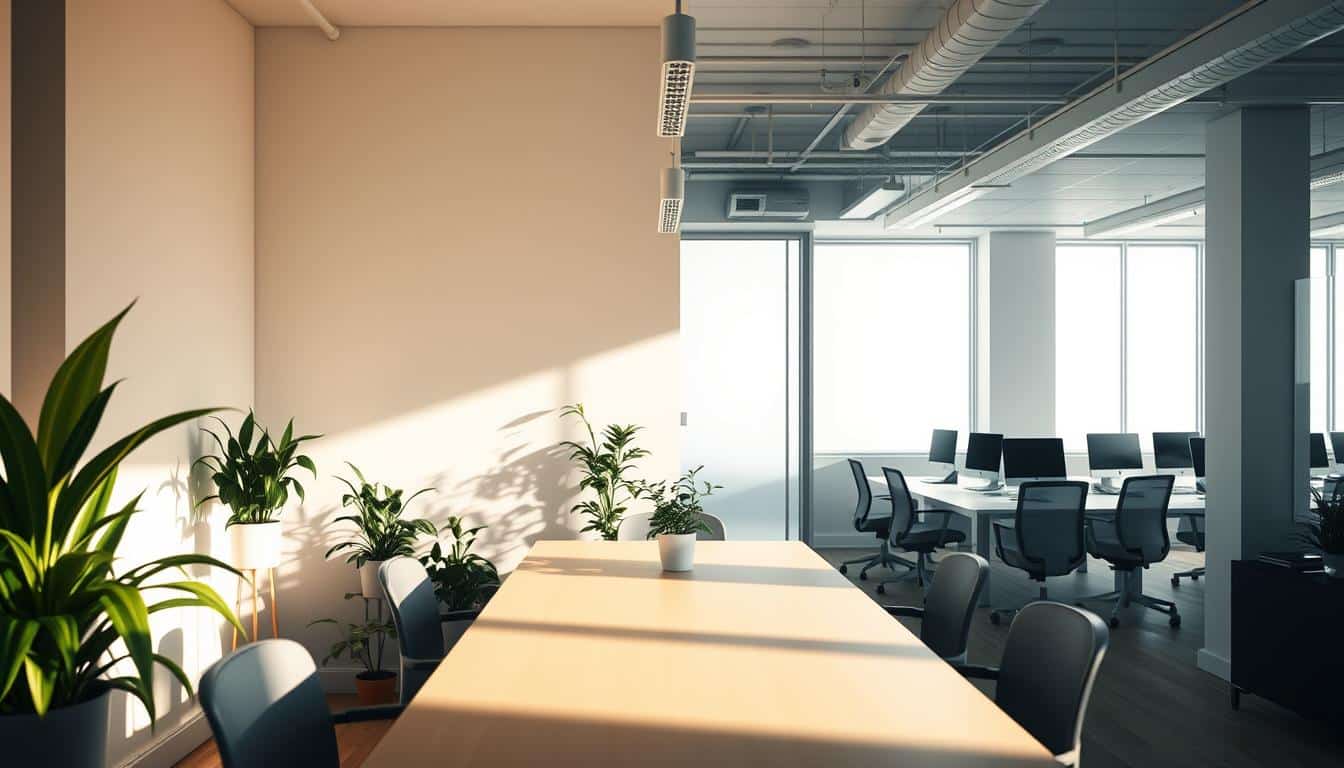
Natural light can change how a small office feels and works. Using daylight wisely brings comfort, focus, and balance. Small changes to windows and their coverings can boost natural light. No need for big renovations.
Benefits of windows and daylight on circadian rhythm and focus
Having a window helps keep your body’s clock on schedule. It supports regular sleep patterns. For those working full-time, daylight lifts mood, and focus, and boosts productivity. Even a little light during the day helps you stay sharp and lowers tiredness.
Window treatments: adjustable blinds and curtains to control glare
Control is everything in maximizing natural light. Use adjustable blinds or curtains. This lets you block harsh sunlight but keep good daylight. Mix sheer curtains and solid ones. This way, you can adjust for video calls or changing sunlight.
- Place desks so windows are to the side, reducing screen glare.
- Pick blinds or shades that let you adjust the daylight.
- Choose fabrics that are light-colored and don’t reflect too much. This softens sunlight while keeping its benefits.
Mirror placement to reflect light and create spaciousness
Mirrors can spread light into dark corners, making small rooms feel bigger. Put a mirror near your desk or across from a window to send light further. This will avoid distracting reflections behind you.
- Use a couple of small mirrors to light up shaded spots.
- Don’t put a big mirror right behind your desk to avoid clutter.
- Opt for mirrors without frames or with slim ones for a sleek look that enhances natural light.
Choosing the Right Bulbs and Fixtures for Small Spaces
Lighting is key in a small office. Choose bulbs and fixtures that make the space calm and focused. They should also lessen eye strain. Small spaces do well with lights that mimic natural light. Avoid using just one bright light from above.
Warm-toned and full-spectrum bulbs for natural feeling light
Warm-toned lights, between 2700K and 3000K, make a room welcoming. Combine these with full-spectrum bulbs for tasks needing true color, like video calls. LED full-spectrum bulbs are energy-efficient and show real skin tones, unlike some older fluorescents.
Avoiding noisy fluorescents and solving flicker with alternatives
Fluorescents can be noisy and flicker, causing headaches and fatigue. Choose high-quality LEDs or better fluorescents to prevent flicker. Steady table or floor lamps also help reduce flicker, boosting the room’s vibe.
Layered lighting strategy: ambient, task, and accent lighting
Balancing light without glare is key. Start with soft overall light. Then add desk lighting for tasks. Finish with accent lights for style. Using many sources reduces shadows and focuses light where needed.
- Ambient: low-glare ceiling or wall fixtures with dimmers.
- Task: adjustable desk lamps for reading and screen work.
- Accent: uplights or small spot lamps to highlight art or plants.
Pick LEDs or modern full-spectrum bulbs for the office. Adding dimmers lets you adjust the light as the day changes. This makes the space comfy and efficient, matching Feng Shui ideas for good energy.
Feng Shui Lighting Tips for Small Offices
Good lighting can change the mood and function of a small office. Mixing focused and ambient lighting helps guide your focus. It also softens shadows and keeps energy moving. Here are tips to make feng shui lighting work for you in a way that’s both natural and useful.
Focused task lighting: desktop lamps to direct attention and reduce glare
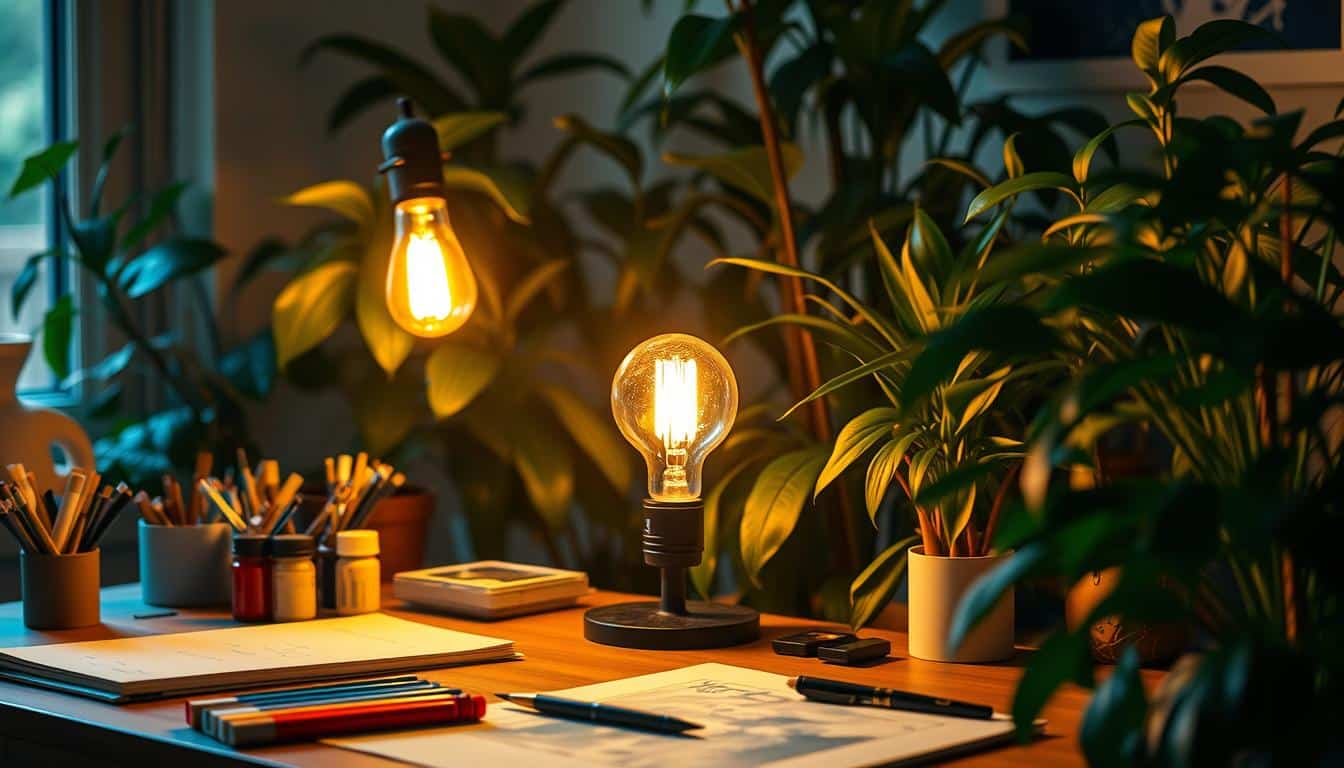
Pick an adjustable desk lamp with a warm, steady glow. Position it so your papers are bright without bouncing light off screens. When choosing task lighting, go for lamps you can dim. Those with a diffuser soften the light and ease eye strain.
Up-lighting and floor lamps to lift chi and soften shadows
Adding an up-light floor lamp near your desk can raise energy and brighten the space above. Up-lighting is great for rooms with low ceilings. It creates a gentle light that reduces contrast and lifts heavy shadows that slow down energy flow.
Using metallic accents and reflective surfaces to amplify natural light
Add metal items like brass lamp bases or shiny frames if they fit your room’s look. Metals reflect light into dim areas, bringing balance as the feng shui metal element. Using small mirrors or glass tops can enhance light reflection in a subtle way.
Strategic lamp placement to balance energy around the desk and entryway
Set up lamps by the desk and entrance to make these areas inviting. Don’t put bright lights directly behind you, as they cause distracting shadows. Combine a focused lamp with up-lighting or a wall sconce. This keeps lighting even and avoids energy blocks.
- Use warm color temperatures to aid focus and support long work hours.
- Have switches within reach to adjust lighting as your tasks shift.
- Change up decorative metals and reflective pieces with the seasons for balance.
Color, Decor, and Plants: Complementary Lighting Strategies
Choose colors and decorations that match your lighting. This will set the mood and focus in a small office. Combining paint, textiles, and fixtures can make the area peaceful and boost productivity. Light helps spotlight important areas and keeps the room free from too much going on.
Using color accents with lighting
- Add a touch of red for energy in small amounts: like a lamp shade, a pillow, or a table accessory. Put it where a quick energy boost is needed, near a task light.
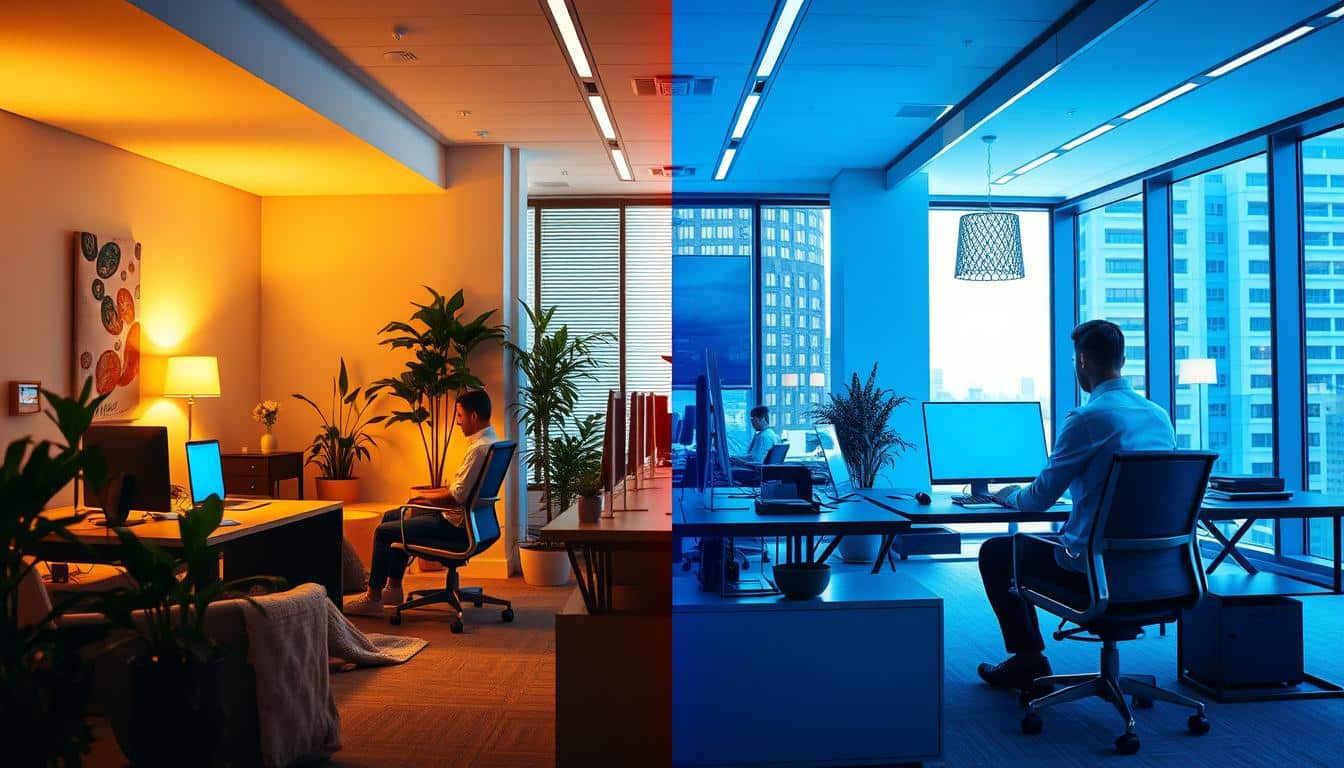
- For a calm office, bring in blues through fabrics or gels in the east or southeast side. Blue shades go well with cooler light for stress-free focused work.
- Use green textiles and plants to bring in a feeling of growth, following green growth feng shui. Warm lights or changeable color temperatures keep the greens looking vibrant.
Earth tones and subtle palettes
- Choose soft greens, warm yellows, and light browns for walls or rugs to feel grounded.
- Add cozy lighting to these colors to lessen eye strain and keep the space from feeling tight.
- Reflect light softly using mirrors and brushed-metal details to spread warmth without making the room feel too busy.
Adding live plants and artwork
- Add plants and choose lighting that go well together. For example, use uplights behind tall plants to make the room seem taller.
- Pick a variety of small and medium plants that fit the light available, like pothos or ZZ plant, for better air and a comfy look.
- Display artwork that means something to you and use adjustable lights to highlight it. This creates peaceful spots and adds good vibes to the area.
Keep things balanced: let the principles of color and lighting guide you, but don’t let them take over. Small pops of red, blue, or green are most effective when mixed with neutral tones and the right lighting.
Conclusion
This feng shui office guide sums up how to make your office brighter and more inviting. Start by letting in as much natural light as you can. Use adjustable blinds to keep glare away, and consider mirrors or shiny objects to spread light around. Swap out loud and flickering fluorescent lights with quality LEDs that look more natural. This can help you feel better and stay focused.
To get the lighting just right, think about using a few different sources. An adjustable lamp can help with work that needs more focus. A soft ceiling light adds general brightness. And an upward-facing lamp can make the whole room feel warmer and more welcoming. Adding some colors and earthy tones can keep the room feeling balanced. Real plants and some choice art can make the air cleaner and the room nicer to look at, all while sticking to feng shui rules.
Here are some concrete steps to take next. Check out how your windows are set up and if they let in too much light. Change out any lights that aren’t helping with ones that show colors truly. Get a lamp for detailed tasks and another that lights up the ceiling. Use mirrors and shiny things to give your space more light. Add some sturdy plants to bring life to your office and choose warm colors to boost energy where it’s needed.
Making small changes to your lighting and decor can really pay off. You might notice you feel more energized, healthier, and get more done, especially if you work long hours. Keep these tips in mind for a simple plan to make your workspace better and more enjoyable.
Content created with the help of Artificial Intelligence.