Feng shui connects your workspace layout to your career growth and daily vigor. Having a thoughtfully placed desk and lamp can boost focus, welcome new opportunities, and lower stress. It’s not just about looks; it’s a working method to enhance clear thinking, vision, and steady career progress.
Begin with the basics: backing yourself with a solid wall or filing cabinet for support and having a clear, bright space in front to welcome opportunities. Combine this with a lamp that doesn’t cause glare or deep shadows to keep the energy flowing. A tidy desk, especially on Clean Your Desk Day, allows energy to move freely and makes any lamp placement better.
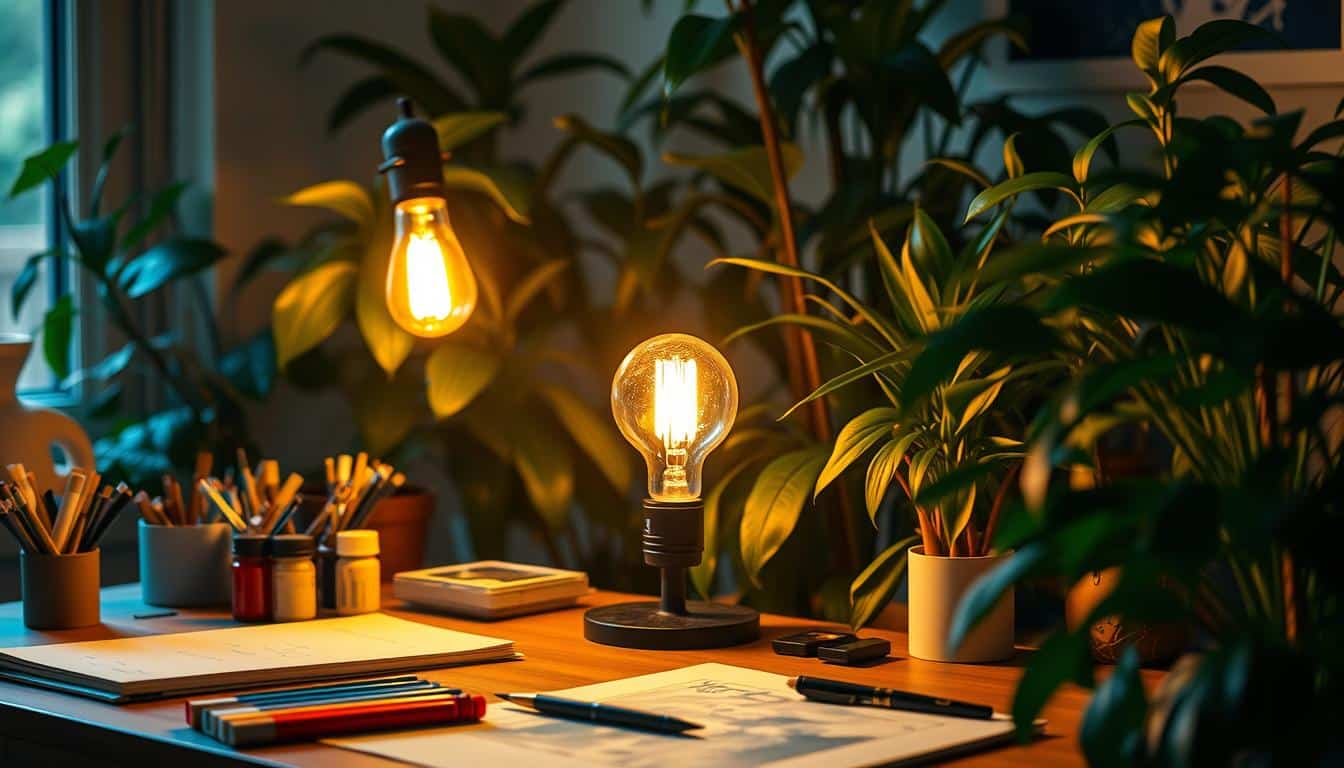
Lamps in feng shui are symbols of clarity, truth, and wisdom. Opt for a lamp with a round or oval shade for harmony, and choose materials that match the room’s vibe: metal for dynamic energy, wood or ceramic for a peaceful atmosphere. When setting up lighting, put a personal lamp in the wealth corner on the upper-left, but watch out for glare and uneven shadows first.
Key Takeaways
- Desk Lamp Placement According to Feng Shui boosts clarity and career energy when combined with solid desk support and an open front.
- feng shui desk lighting should avoid glare and harsh shadows to protect focus and reduce strain.
- workspace lighting feng shui favors round shades and balanced materials: metal for activity, wood/ceramic for calm.
- Desk lamp placement often works best in the upper-left wealth zone, but adjust for left-handed users and screen reflections.
- Keep desks clutter-free and choose stable desk materials to amplify the benefits of feng shui office tips.
Why Lighting Matters in Feng Shui for Workspaces
Light determines the feel of a workspace and our mental performance. In feng shui, a bright ming tang before the desk brings clear thought and chances for success. Lamps are practical but also symbolic, guiding energy flow. They help you see clearly without having to sit by the entrance.
Feng Shui principles behind light: clarity, truth, and wisdom
Light stands for clarity, truth, and understanding in feng shui. Using lights to support these qualities fits feng shui rules and helps our minds tackle challenges. A small lamp that lights up the space in front of you makes things welcoming. This connects to the idea that seeing clearly in feng shui means spotting opportunities easily.
Psychological effects of proper desk lighting on focus and stress
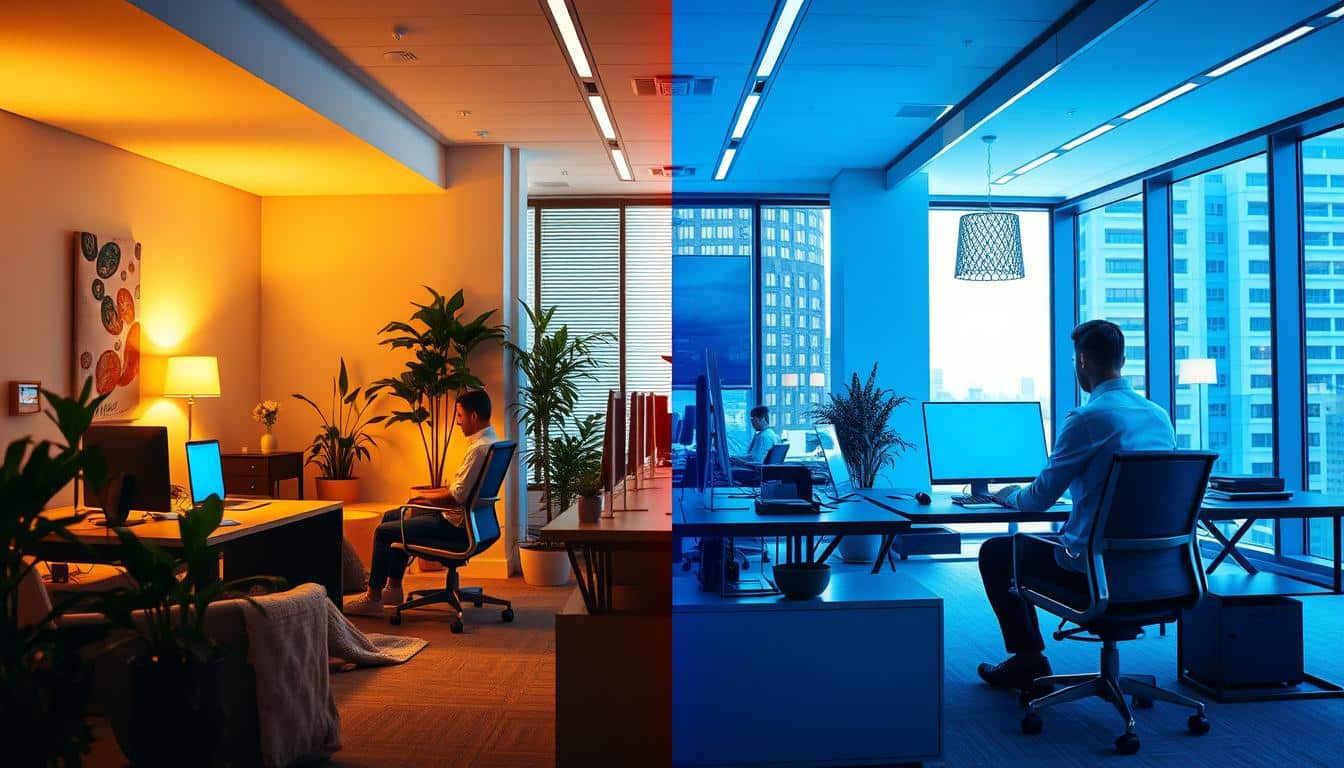
Great lighting lessens eye strain and keeps our focus sharp. Research has found that clean, warm light and a tidy desk make us more comfortable and efficient. Smart lamp use enhances our focus by marking areas for reading, typing, and thinking. Soft, warm light avoids the tiring effect of cold, bright light.
Common problems from poor lighting: glare, shadows, and beam pressure
Weak lighting can cause glare, deep shadows, and a feeling known as beam pressure from overhead beams. These issues tire the eyes and lead to a low stress that hurts our work output. Placing lamps smartly can ease beam pressure and light up dark spots without causing glare on screens and documents.
- Use angled task lights to cut glare and reduce harsh reflections.
- Choose warm bulbs when long work sessions are common to protect energy levels.
- Balance brightness so the front area stays bright without competing with doorways.
Desk Lamp Placement According to Feng Shui
Light influences how we feel and work in a space. Place your lamp with purpose to let energy flow towards your goals. This keeps focus sharp. Make deliberate choices on its position, angle, and design to boost both productivity and peace.
Optimal side placement: lamp on the upper-left for wealth and prosperity
In Feng Shui, the upper-left corner is linked to wealth and prosperity. Put a lamp there to bring energy to this area, but first, clear any clutter. A well-placed light here can activate the space without overwhelming your workspace.
Adjustments for left-handed people and ambidextrous setups
For left-handers, the lamp should be on the opposite side. This ensures no shadows over your dominant hand. Especially if drawing or writing is your thing. Desks used both ways need lamps that adjust easily, fitting the task at hand.
Avoiding direct glare and shadows on work surfaces and screens
Glare can hurt focus and tire the eyes. Position lamps to avoid beams on screens. Use matte surfaces to reflect light softly. Choose diffusers or frosted bulbs to cut glare and ease eye strain.
Direct light to cover your workspace evenly. Experiment with placement to dodge sharp shadows. This helps when using computers or doing paperwork.
Lamp height, shade shape, and material considerations for balanced chi
The lamp’s height and shade matter a lot for good feng shui. It should light up your desk without blinding you. A shade higher than the desk tends to work well.
Choose shades that are round or oval to bring harmony. Metal adds brightness, while wood or ceramic shades bring calmness. Pick based on your work’s nature and the room’s vibe.
- Set your lamp to enhance the Green Dragon’s energy on the left without crowding your desk.
- Adjustable arms are handy for switching between right and left-hand use as needed.
- Soft diffusers or frosted bulbs are essential to keep glare down and protect your eyes.
- When picking a lamp, consider how its height and shade material affect the room’s feng shui.
Integrating Lamp Placement with Desk Positioning and Four Symbols
When setting up your workspace, consider the lighting and room symbols. First, look at the left and right sides, what’s in front, and behind you. Making thoughtful choices can improve your work area and its energy without adding clutter.
Green Dragon and White Tiger balance
Place items that need action on the left and those that are more passive on the right. A lamp that symbolizes the Green Dragon on the left promotes growth. Here, keep tools or a neat tray. On the right, allow the White Tiger space with a simple paperweight or organized folders.
Vermilion Bird — front lighting
Keep the space in front of your desk open. This invites the vermilion bird bright hall effect. Shine light over your desk area, not at the door. Bright lighting here boosts focus and welcomes new chances.
Black Tortoise backing strategies
Your chair’s back support is crucial for feeling stable. Without a wall, use bookshelves, a screen, or a cushion for support. Lite the area behind softly to avoid the feeling of being exposed.
Desk shape, material, and lamp interaction
Choose a lamp that complements your desk. For wood desks, a wood or ceramic lamp adds warmth. Metal or glass desks benefit from a wood lamp or plant to soften the look. Pick a lamp that fits well with your desk’s size to keep things balanced.
- Use a left-side lamp for task lighting and symbolic energy.
- Keep the front clear with even vermilion bird bright hall lighting.
- Create black tortoise backing feng shui when a wall is absent.
- Pick a desk shape material color feng shui lamp that harmonizes with the desk.
Practical Tips and Remedies for Common Office Situations
Small changes can make a big difference at your desk. These tips help with windows, beams, clutter, and choosing lamps. They make your desk a place of focus and peace. Use these ideas every day to keep energy flowing and avoid stress.
Working with windows: distance, curtains, and viewing openings
Put your desk near a window, but leave some space. This creates a feeling of stability and stops bright glare. If a window is behind you, angle your desk to see the door. Or, use a tall shelf as a barrier.
Add adjustable curtains or shades to control light. This reduces glare on your screen. Clean the window and keep the area clear for good energy flow.
Desk under beams or near doors: lamp fixes and symbolic remedies
To lessen beam pressure, use lamps to soften energy. A small plant, a crystal, or a salt lamp can deflect harsh lines. You can also hang something from the beam to break its direct impact.
If a door is too close, place a lamp to softly block it. This creates a gentle barrier without stopping movement. Point the light away from the door to keep energy balanced.
Clutter control, cable management, and minimalism to keep chi flowing
Keep your desk clear with only needed items. Sort papers into trays and put supplies in drawers. Set a weekly clean-up reminder to avoid clutter.
Manage cords with clips or a power strip. Keep your desk’s center open. This makes the main work area feel free and energized.
Choosing lamp styles: round/oval for balance, wood/ceramic for yin, metal for yang
Choosing the right lamp style is key. Round or oval shades create a soft light. Wood or ceramic bases bring calm energy, perfect for long tasks.
Metal lamps are good for busy areas. They help you concentrate. Add a diffuser or a soft white LED bulb to soften light and spread it evenly.
- Position lamps to avoid casting long shadows on documents or screens.
- Match lamp warmth to task: warmer light for creative thinking, neutral light for detailed work.
- Keep personal items minimal; one plant or one photo is enough to personalize without crowding.
Conclusion
Feng Shui mixes design with mental wellness. It suggests that how you place your desk lamp can help your career and mindset. Place it with a solid wall behind it, a bright space in front, and in the wealth area if you’re right-handed. This boosts growth, clear thinking, and keeps energies balanced.
Choosing the right lamp shape and material is key. Opt for round shades and wooden materials for a calm vibe. Metal brings in focused energy. Make sure the light avoids creating glare or sharp shadows. Adjusting the lamp’s height and angle can spread good energy across your desk.
Even small actions can make a big difference. Keeping your desk tidy, using certain colors, adding plants, or lighting a candle keeps you going. Follow this feng shui advice for your desk lamp: ensure it has a solid back support, balance with the Green Dragon on the left and White Tiger on the right, pick the right side for your handedness, and keep your space organized. This way, you’ll have a workspace that’s both calming and productive.
Content created with the help of Artificial Intelligence.