Feng Shui is a traditional Chinese method that aims to create harmony with our surroundings. It offers guidance on arranging home offices to boost efficiency, creativity, and overall happiness in 2024. A key factor in this practice is lighting. It strongly influences mood, attention, and energy flow.
Natural light is top-rated for energizing feng shui home office designs. By placing your desk near a window and using light curtains, you can keep alert and sync with natural day-night cycles. If natural light is not an option, choose artificial lighting that imitates the sun. Use bulbs that cover the full spectrum and arrange lamps in layers.
Artificial lights should create a cozy, balanced feel. Use task lamps for direct light that doesn’t cast harsh shadows. Set up ambient lighting to soften the space and ease eye discomfort. Stay away from cold and blinking fluorescent lights—they drain energy and are tiring.
Optimal lighting for a feng shui office also includes the fire element. This means using lights with warm colors and manageable brightness to encourage drive without sacrificing peace. Whether your office is brightly lit or lacks windows, choosing the correct lighting can make any room focused, efficient, and comforting.
Key Takeaways
- Prioritize natural light by positioning desks near windows and softening glare with sheer curtains.
- Use full-spectrum and warm-toned bulbs to simulate daylight when windows are limited.
- Layer lighting with ambient, task, and accent sources to reduce shadows and eye strain.
- Avoid harsh downward spotlights and flickering fluorescents that disrupt chi and focus.
- Balance brightness to reflect the fire element: warm, motivating light without overpowering the room.
Why Lighting Matters in Feng Shui Home Office Design
Light shapes how we feel and work in a space. Good lighting helps with focus and creates a balanced atmosphere. Bad lighting choices can make us tired, distracted, and create uneven energy. Thoughtful lighting combines practical needs with Feng Shui principles.
Role of light in Chi flow and workplace energy
Light is linked to the fire element, making it important in chi flow. When balanced, it moves energy smoothly through a room. Soft, warm light sources help keep Chi steady, preventing energy from getting trapped.
Impact of lighting on productivity, mood, and health
- Good lighting lessens eye strain and helps with our sleep cycle, making us more alert during the day.
- Full-spectrum bulbs imitate natural light, reducing eye fatigue and showing true colors on screens and prints.
- Consistent, varied lighting helps stabilize our mood and lessen stress, boosting productivity for longer work periods.
Natural light vs. artificial light: psychological and physiological effects
Sunlight boosts attention, mood, and regulates hormones for sleep and focus. Using windows well can enhance creativity and resilience.
Artificial light should enhance, not replace, natural light. Use full-spectrum LEDs or adjustable lights to match natural daylight. Soft lights reduce harsh shadows and focused spots of light.
To balance natural and artificial light in feng shui, arrange windows, desk placement, and lighting layers. Even small changes, like moving a desk to catch daylight or adding a warm lamp, improve thinking and energy.
Principles of Natural Light for a Balanced Feng Shui Workspace
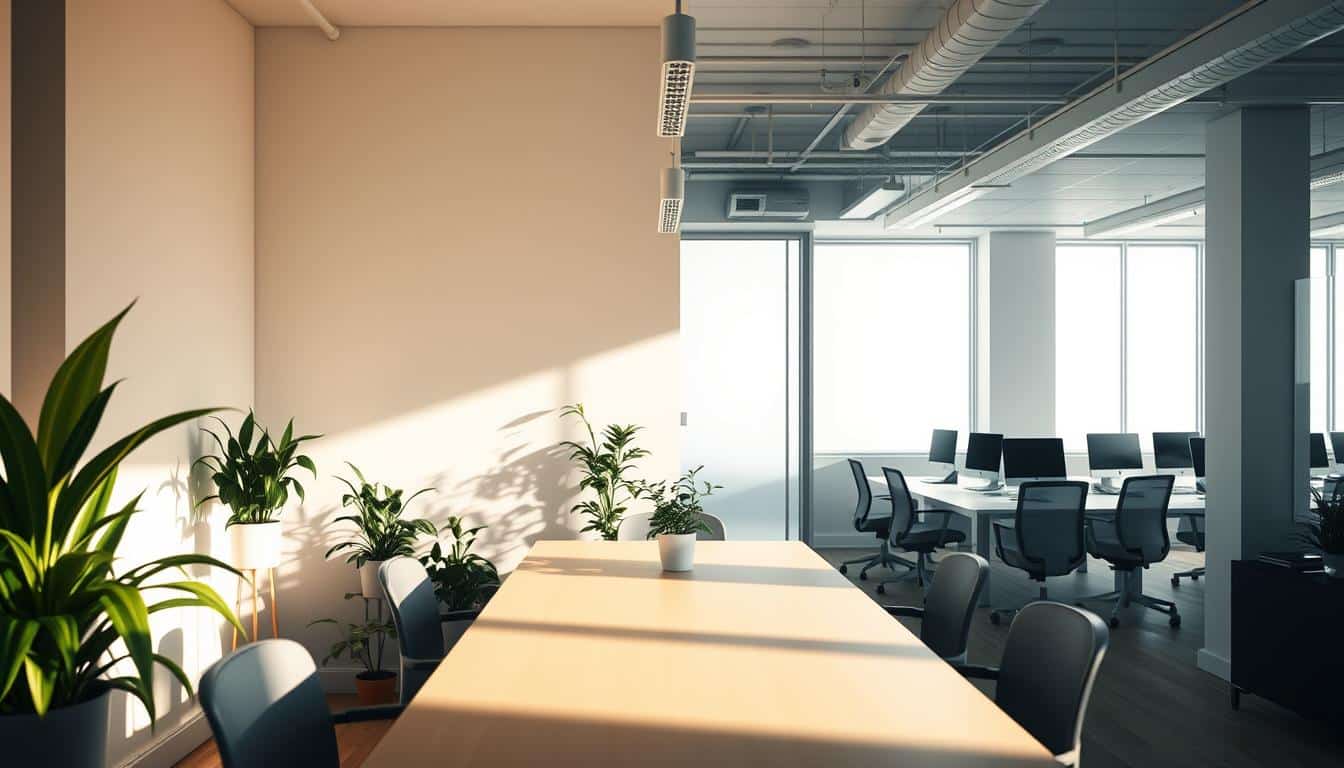
Natural light improves mood, focus, and energy flow in a home office. Adjustments to windows and desk placement help manage energy. They protect your eyes and screens too. Daylight enhances the room’s natural elements, avoiding glare.
Maximizing window placement and desk positioning in the command position
Put your desk where you can see the door but not in direct line with it. This position offers control and lessens surprises. A solid wall behind you provides support and stability.
Try to place your workspace near a window or a skylight for more daylight. Having the desk off-center from the door lets you keep an eye on the entrance. This way, natural light can brighten your workspace.
Use of sheer curtains and window treatments to soften harsh sunlight
Sheer curtains keep the office light and airy. They soften sunlight, making sure screens are visible and eyes are strain-free. Use adjustable blinds with these curtains to handle the sunlight’s intensity.
- Pick linen or polyester sheers for light filtering.
- Combine with blackout panels when you need privacy or have video calls.
- Open treatments during work to keep a natural flow and fresh energy.
How daylight supports the wood and water elements
Daylight helps plants grow, involving the wood element’s energy. Try placing a ficus or pothos near the window. It brings nature into your work.
Light reflection and water features enhance the water element. They boost creativity. Add a small fountain or glass pieces where daylight can reach them.
Types of Artificial Lighting to Complement Feng Shui
Artificial light should enhance natural daylight and match the room’s purpose. It should minimize glare and keep your eyes comfy. Plus, it needs to improve the energy in your work area. Small choices in lighting can significantly impact the feel of a room.
Full-spectrum and warm vs. cool fluorescent lighting
Full-spectrum lights mimic the sun and help avoid eye strain after hours of work. Designers often pick LED lights that are full-spectrum for better color and consistent light. Stay away from cool fluorescent lights that create flickers or emit harsh blue light. The choice between full-spectrum and cool fluorescent lights can change how you feel and concentrate.
Layered lighting: ambient, task, and accent lights
- Ambient light provides smooth, overall lighting. Soft ceiling fixtures or recessed LEDs that light up the ceiling can create peaceful vibes.
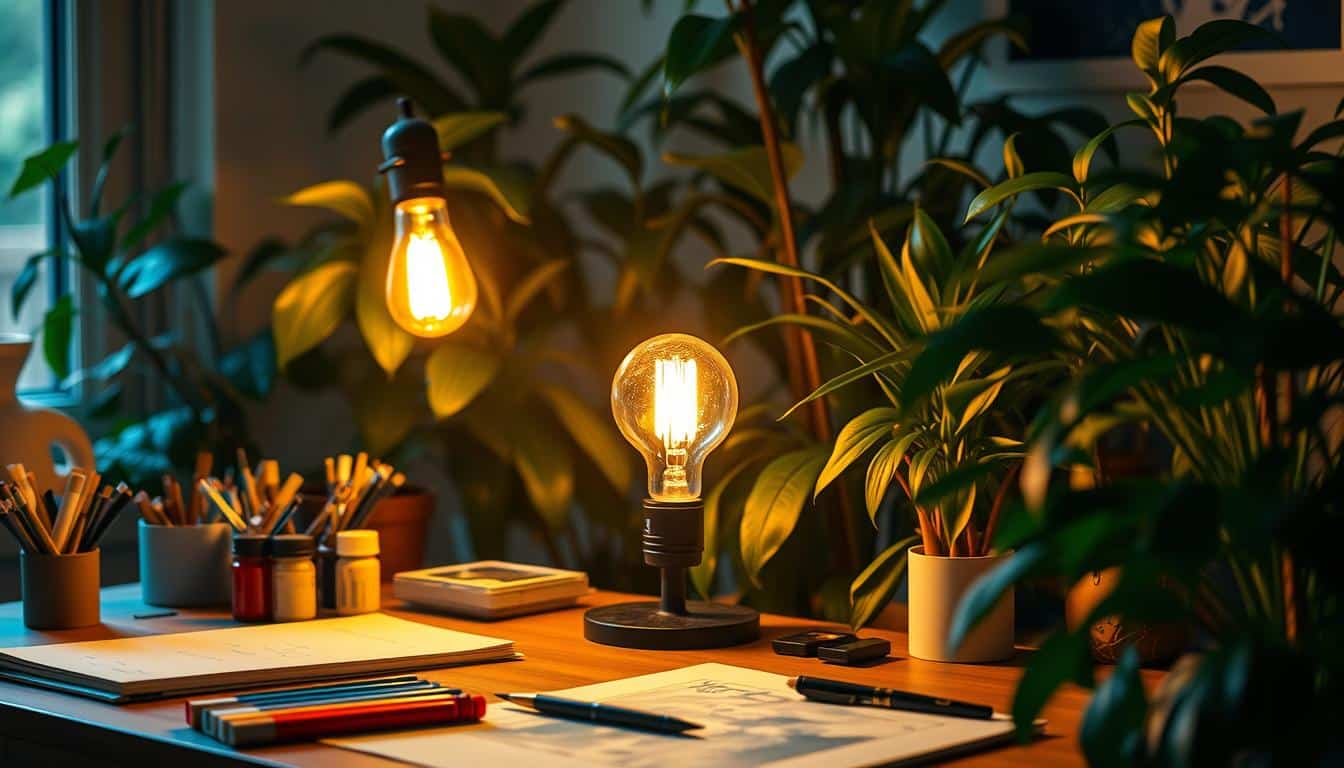
- Task lighting focuses light right where you need it. Adjustable desk lamps and LEDs under shelves give precise lighting without annoying glare.
- Accent lights spotlight things like artwork, plants, or bookshelves. Tiny uplights or lights for pictures add layers and interest visually.
Putting together a home office with varied lighting ensures every task gets its perfect light. This supports a focused and balanced energy flow.
Choosing fixtures that represent the fire element without overpowering space
Choose warm-hued fixtures, lamps you can dim, and low-wattage accent lights to bring in the fire element’s drive. Opt for bulbs that have a cozy color for that warm glow. Adjust the light so it feels uplifting, not too overwhelming.
To balance warm and cool lights in feng shui, try out different setups. You could have a warm lamp on your desk and cooler general lights further away. This approach can make an environment that boosts your focus and overall well-being.
Best Lighting Setup for a Feng Shui Home Office
Good lighting makes work clearer and keeps energy balanced. Begin with your desk in a powerful spot and add lights that enhance daylight. Using different layers of light, you can make a space that’s both calm and easy to work in, without sharp light contrasts.
Positioning task lamps to support the command position and reduce glare
- Put a task lamp a bit behind and to the side of your main hand to cut glare and keep shadows off your work.
- Pick lamps with arms you can move and heads that swivel to direct light right where you need it, keeping your desk in a strong spot.
- Go for warm, soft lamp shades to ease light and protect your eyes during long work times.
Combining overhead ambient light with adjustable desk lamps for balance
- Match a gentle overhead light with a desk lamp you can adjust to keep light even across your work area.
- Choose either full-spectrum or warm LED lights for overall light that’s not too harsh.
- A good balance stops your eyes from tiring and keeps the room’s energy moving smoothly.
Using dimmers and smart bulbs to adapt energy throughout the day
- Add dimmers and smart bulbs to change light levels as the day goes by, supporting your natural daily rhythm.
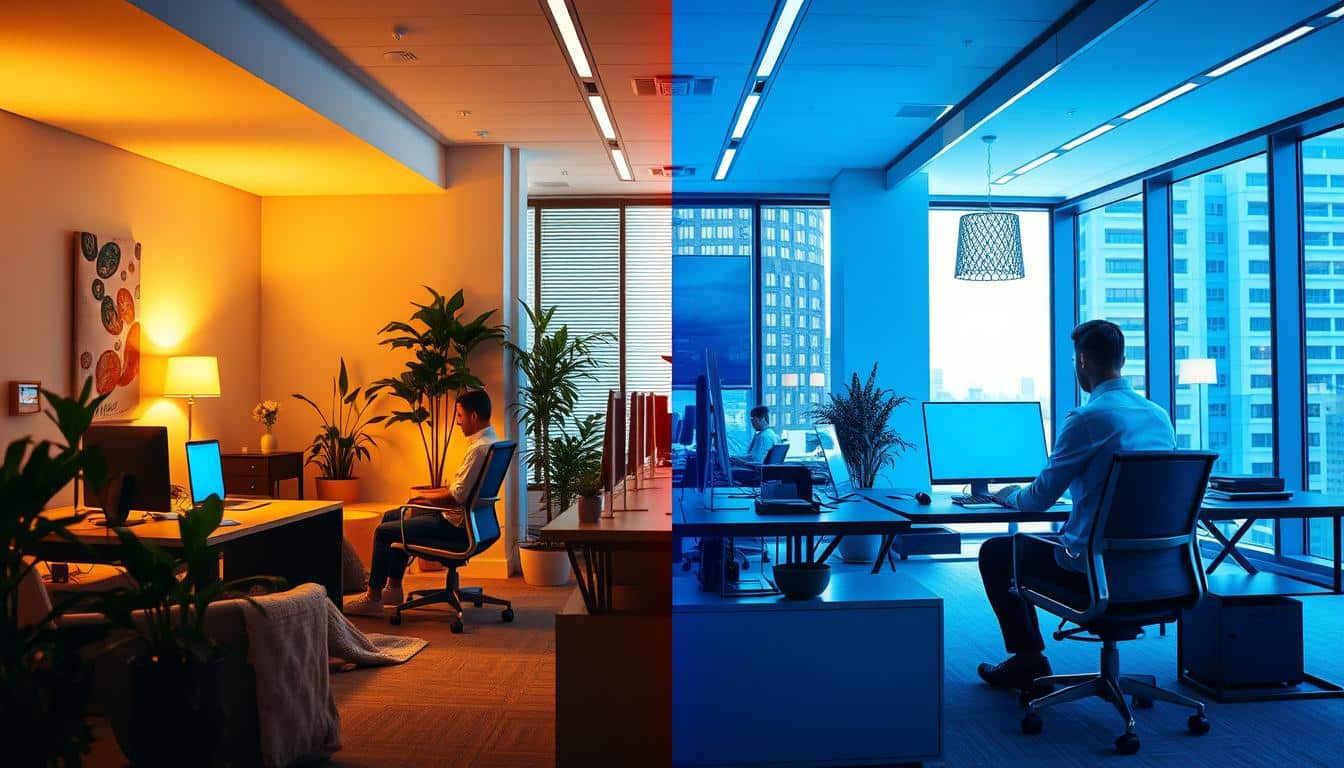
- Set up your lights to gently move from warm to cool light, helping you focus in the morning and relax later on.
- Doing this helps your work area match how you feel and what you need to do, while also saving power.
Selecting bulb color temperature and CRI for comfort and clarity
- Pick bulbs with a high CRI (90+) for true color and less eye strain.
- Use warm light (2700–3000K) for a cozy feeling and cooler light (3500–4100K) when you need to be alert.
- Try different lights and colors together to find the best setup for your daily routine.
To get everything working well together, think about where to put your task lamp, mix ceiling and desk lights, and use dimmers and smart bulbs for the right feel. Small changes can make your work area feel focused, bright, and ready for anything.
Balancing the Five Feng Shui Elements Through Lighting Choices
Lighting can harmonize the elements in your home office. Use thoughtful choices to enhance growth, focus, and creativity. These tips will show you how.
Wood — growth and vitality
- Choose indirect sunlight and full-spectrum bulbs near plants and wood.
- Pick shades made of natural fibers. They soften light, enriching wood energy.
- Use soft uplighting behind plants or shelves to boost wood energy.
Fire — motivation and warmth
- Accent lights with warm colors add energy to any space.
- Select dimmable lights or small spots for color without too much brightness.
- LEDs that mimic candles give a safe, warm fire vibe.
Earth — grounding and stability
- Choose lamp bases in earth materials to visually ground the space.
- Warm, amber lights offer peaceful tones for steady work.
- Soft lighting near seats adds stability to your workspace.
Metal — clarity and precision
- Sleek metal lights and focused task lighting provide clear light.
- White or cool bulbs enhance focus for detailed tasks.
- Adjustable desk lamps reduce clutter and focus light where needed.
Water — creativity and reflection
- Cool-toned LEDs and reflective panels mimic water’s flow.
- Use soft blue light to inspire without losing warmth.
- Reflective surfaces near diffused light encourage a flowing energy.
Mix these lighting types for true feng shui balance. Blend wood, fire, earth, metal, water themes for a strong setting. Change up lights and dim settings for perfect balance and energy flow.
Practical Tips to Avoid Lighting Mistakes That Disrupt Chi
Good lighting can make your home office a calm, focused place. It avoids eye strain and keeps energy smooth. Choose warm, even lighting and set up fixtures so the whole room gets light. This avoids sharp, narrow beams hitting just one spot.
Why harsh downward spotlights and flickering fluorescents harm the space
Downward spotlights break up the room’s energy into small parts. Flickering fluorescent lights can make your eyes tired and stressed. Instead, try full-spectrum LED or warm incandescent lights. They mimic natural daylight and don’t flicker.
Managing glare, shadows, and uneven illumination
- Put task lamps on your dominant hand’s side. Angle them to keep your screen reflection-free.
- Mix different lights: ceiling lights, adjustable task lamps, and soft accents to prevent shadows.
- To reduce glare and soften harsh spots, use diffusers, frosted bulbs, or sheer shades.
Decluttering light sources and using concealed wiring for clean energy flow
- Use Velcro straps to tidy cords. Run cables inside channels to keep the view clean.
- Opt for recessed outlets and hide wires. It keeps the space looking neat and lets chi flow freely.
- Have fewer but well-placed lights. It makes energy clearer and upkeep simpler.
Even small changes, like replacing a flickering light with a good LED, can transform a room. Adding a dimmer can also make a big difference. These steps help you avoid common lighting mistakes. They make your workspace cozy and productive.
Integrating Lighting with Ergonomics, Air Quality, and Décor
Good lighting works with ergonomic furniture and décor to make a workspace both productive and peaceful. Desks and chairs should be placed where light spreads evenly. For specific tasks, use adjustable lamps. Also, softer lights can help lower eye strain and keep energy balanced.
How ergonomic furniture and proper lighting work together for posture and focus
-
Choose an adjustable desk and a chair that supports your back. Brands like Herman Miller or Steelcase are good. Make sure your task lighting does not cause screen glare and helps prevent neck bending.
-
Keep monitors at eye level. Warm-colored lamps are best for detailed work. This setup not only feels comfy but also helps you stay focused for hours.
-
Go for desks that are smooth around the edges and made of natural wood. They help in maintaining a gentle look and support the wood element.
Using plants and air-purifying elements near light sources to improve air quality
-
Put plants like snake plants and peace lilies near windows or artificial light. They enhance air quality and freshen up your office.
-
Set woven baskets and wooden organizers next to plants to define the space and keep energy flowing clearly.
-
Keep your plants healthy with simple care: trim them, dust the leaves, and rotate them to ensure they all get light evenly.
Coordinating artwork, color palette, and lighting to support office intent
-
Select artwork that echoes your ambitions. Images of nature and abstracts that seem to move upwards can inspire growth and bring balance. Position them where you can easily see them.
-
Illuminate your artwork softly with accent lamps. This way, the light and décor create a focused space without causing glare or shadows.
-
Pick calming shades of blue and green to encourage creativity. Use red sparingly to energize. Ensure your lighting matches these colors for a unified atmosphere.
Conclusion
Creating a good home office is not just about the looks. It’s also about how you arrange light, where you place your desk, and the kinds of elements that help you work better every day. Having the right lighting is key, which means letting in lots of natural light, placing your desk where you can be in charge, and picking artificial lights that are gentle but bright enough to keep your energy up. By adding things like light curtains, a good desk lamp, and a control to adjust the light, you can quickly change how the room feels and how well you can focus.
When you combine different types of lighting with comfy furniture and some green plants, you make a workspace that feels calm and helps you think clearly. You should stay away from lighting that’s too stark or bulbs that flicker. Instead, go for lighting that includes soft background light, focused task lighting, and a little bit of accent lighting to highlight your space. Making these smart lighting choices can help keep your workspace feeling balanced, covering all the bases from wood and fire to metal and water, and keep you on track with your work.
To sum it up, setting up your lighting the right way matters a lot: start with as much sunlight as possible, add in some warm lights with high color rendering, and keep your space neat and tidy. You don’t have to change everything at once—just a few smart updates here and there can make a big difference. These small changes can turn your workspace into a spot that’s not only more effective for getting stuff done but also better for your creativity and health.
Content created with the help of Artificial Intelligence.