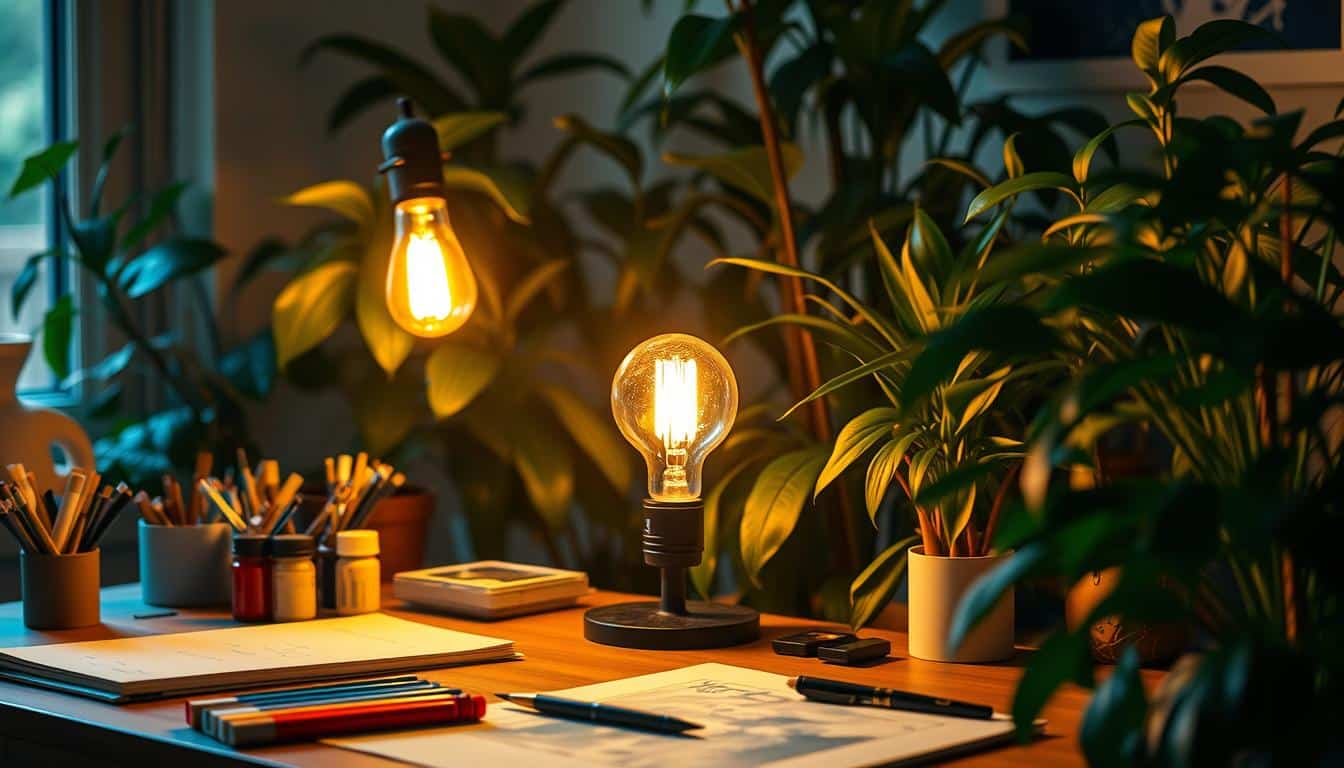
Finding the right light can make working long hours easier and keep you focused. This guide will show you the best office and LED lights. It takes into account comfort, energy efficiency, and price. We use tests and details from trusted brands like Philips Hue, GE, Sylvania, Cree, and more to suggest the best choices for people who work from home, medical staff, and office managers.
Good lighting helps prevent tired eyes and keeps you concentrated. Important factors are the amount of light (lumens), color warmth (Kelvin), color accuracy (CRI), power usage, adjustability, and how long the bulb lasts. Choosing LED lights is a smart move because they’re both efficient and long-lasting. Plus, bulbs with a high CRI (≥90) show colors more truly, which is great for jobs that need attention to detail.
In later parts, we’ll discuss the best specs for LED bulbs, why you might choose CFL or special bulbs, and highlight top picks like GE Relax, Philips Hue A19, LiteHistory T10, and AmazonBasics. You’ll also learn why good dimmers, like those from Legrand, and the right bulb shapes (A19, T10, Edison) are crucial for setting up a system that eases eye strain during long work hours.
Key Takeaways
- LEDs are top for energy-saving and lasting through long work shifts.
- Pick bulbs with the right brightness and color warmth for the job.
- Bulbs with high CRI (≥90) lessen color misreads and eye discomfort.
- Good dimmers and the correct bulb shapes boost comfort and control.
- Search for Energy Star, lengthy lifespan, and solid guarantees to cut overall costs.
Why lighting matters for long work hours: productivity and eye health
Good lighting can improve your focus and keep your eyes from getting tired. Choosing the right bulbs and fixtures helps you work long hours without strain. See lighting as important to your workspace ergonomics.
Impact of color temperature on alertness and focus
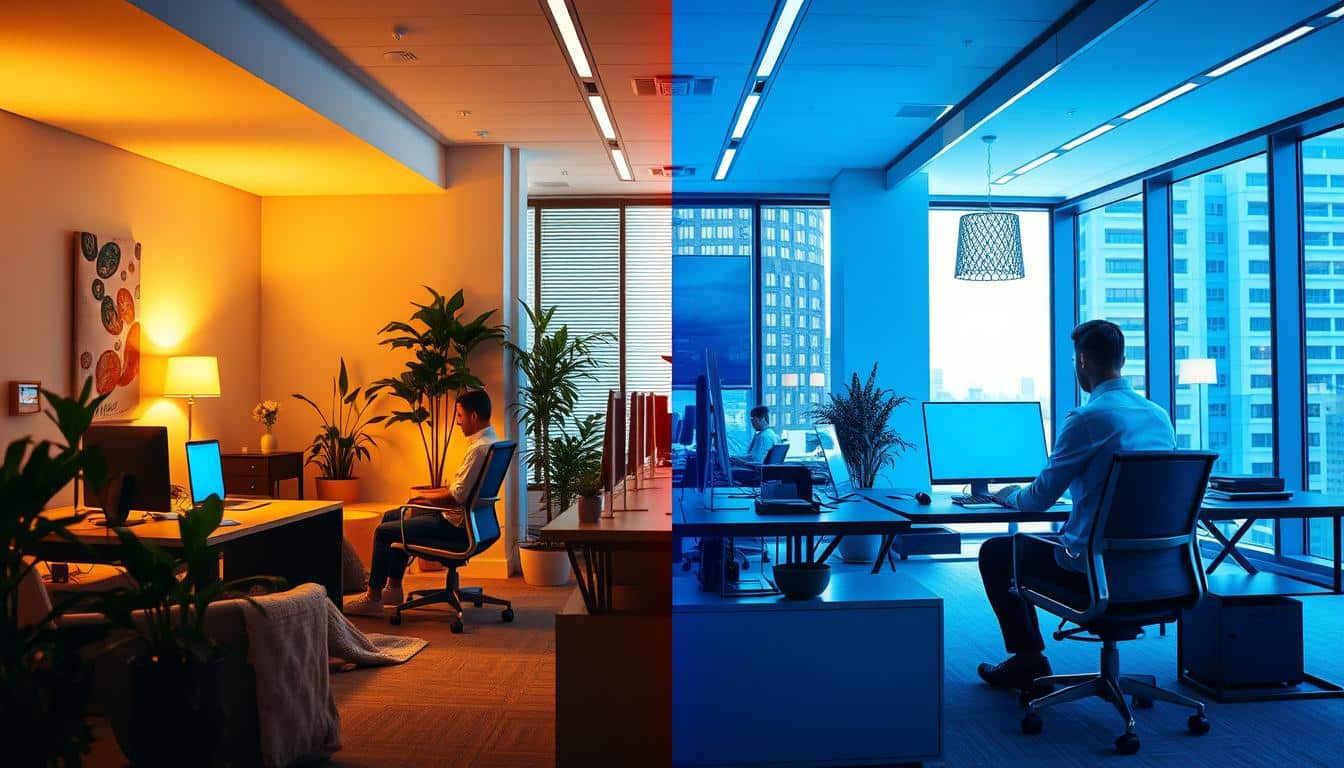
The color temperature of a bulb, measured in Kelvins, shows if it’s warm or cool. Cooler lights around 4000K to 5000K can make you more alert during the day or for long tasks. Daylight tones from 5000K to 6500K help you focus on tasks needing more attention.
Warm lights from 2700K to 3000K are best for relaxing in the evening. Philips Hue smart bulbs let you switch from cool to warm light on a schedule. This way, you can stay sharp when necessary and wind down easily later, all without changing the light fixtures.
Brightness and lumens: how much light do you need
Lumens tell you how bright a light appears. Choose lumens over watts because LED lights are all different. For desks, aim for 800 to 1100 lumens. Task lamps should add direct light for reading or detailed work.
But don’t look directly at bright lights. Use shades or indirect lighting to cut down on glare while keeping the light bright. A 60W LED bulb usually gives off about 800 to 1100 lumens. Smaller accent lights have lower lumens, around 200 to 300.
Color rendering and reducing eye strain
The Color Rendering Index (CRI) shows how real colors appear under artificial light. For accurate colors and less eye strain, pick bulbs with a CRI of 90 or more. Feit Electric and Cree offer high-CRI bulbs for better color accuracy.
To avoid headaches and tired eyes, choose bulbs with no flicker and smooth dimming. Bulbs and fixtures with a consistent output and reliable dimming are best. The right blend of high CRI, accurate lumens, and proper color temperature makes for eye-friendly, productive lighting.
Best Light Bulbs for Long Work Hours
Choosing the right light bulbs is key for those long hours at work. Good lighting keeps you awake, helps your eyes, and lowers your energy costs. Here are some tips to find strong, comfy lighting for all-day tasks.
Why LEDs are the top choice
- LEDs are top for saving energy and stay cooler than other bulbs. Brands like Philips Hue, Sylvania, and Cree offer big energy savings for non-stop use.
- They last longer, usually between 20,000 to 45,000 hours, so you hardly ever need to change them. This means less upkeep in busy work spaces.
- LEDs come in different types: high CRI LED models, bright work lights, ones you can dim, and smart bulbs you can set on a timer. Their variety makes them perfect for long hours at work.
Recommended LED specs for long shifts
- For day work, use bulbs between 4000K and 5000K color temperature. For evening or chill tasks, 2700K to 3000K is good. Philips Hue lets you adjust the color temp during the day.
- Choose main lights with 800 to 1,100 lumens. Add 250 to 800 lumen task lights to lower glare and better see contrasts.
- For work needing precise colors, go for LEDs with a CRI over 90. They ease eye strain and show true colors on screens and paper.
- If you want softer light, get dimmable LEDs. Pair them with good dimmers, like those from GE or Feit Electric, to avoid flickering.
- Opt for ENERGY STAR rated bulbs to be sure of their efficiency and performance. This helps make sure the LED specs save you money during long shifts.
When to consider CFL or other types
- CFLs use less power than old bulbs but not as good as LEDs. They last about 8,000 hours, while many LEDs last 25,000 hours or more.
- CFLs need time to fully brighten and have a bit of mercury, making them hard to throw away. Choose them only if you need to save money upfront, instead of over time.
- For a classic look or specific needs, try LED Edison bulbs from trusted companies like Ascher. If you really need a halogen look, use them for a short time before switching to LEDs.
Top bulb models and brands for extended work sessions
Finding the right bulb is key for comfort, true-to-life colors, and saving money over time. Here are the best bulbs for long work hours. They offer great light quality, color, smart features, and are made for long use.
High-CRI and high-lumen options
LED bulbs with high CRI make colors vivid and lessen eye strain when you work in detail. Feit Electric has bulbs with a CRI over 90. These bulbs dim smoothly and have a brightness range from 450 to 1,600 lumens. They also come with a five-year warranty.
Hyperikon makes bulbs that last up to 45,000 hours. They give a steady light, perfect for long hours of work. Cree and Sunco offer bulbs that are both bright and long-lasting. Sunco even has bulbs that last up to 25,000 hours.
- Feit Electric — CRI >90, multiple lumen levels, dimmable.
- Hyperikon — long-life LEDs for continuous operation.
- Cree & Sunco — bright, durable bulbs for varied fixtures.
Smart and dimmable choices for adjustable schedules
Smart bulbs can change color and brightness throughout the day. Philips Hue systems are great for work and have adjustable white light, lots of colors, and can be controlled with apps or your voice. They work with Alexa and Google Assistant. Some Hue A19 bulbs give off about 1,100 lumens and can last up to 25,000 hours.
GE Relax dimmable bulbs are ideal for creating a flicker-free, warm glow. Using them with top-quality controls improves performance. Legrand smart and Radiant switches allow easy dimming and setting schedules. This helps the bulbs last longer.
- Philips Hue — tunable white, app scheduling, high-lumen smart options.
- GE Relax dimmable — warm 2700K, smooth dimming for comfort.
- Legrand switches — recommended smart/dimmer partners for stable control.
Specialty bulbs for task-specific needs
Some jobs need special bulbs. LiteHistory 5” T10 LEDs are perfect for showing true colors in art and accents with their CRI of 90 and low brightness. Ascher Vintage Edison bulbs offer a traditional filament design. They come in colors from warm to cool and last up to 20,000 hours, adding a special touch to any space.
For outdoor areas or flood lighting, specific bulbs are needed. Hampton Bay has great options for low-voltage outdoor lighting. TCP and EcoSmart have tough LEDs designed for outdoor use and make excellent 20W floodlights. If you’re looking to save, Sylvania, AmazonBasics, and TCP have affordable, energy-efficient bulbs.
- LiteHistory T10 — picture lighting with high CRI and low lumens.
- Ascher Vintage Edison — decorative filament look with variable color temps.
- Hampton Bay, TCP, EcoSmart — outdoor and floodlight task solutions.
- Sylvania & AmazonBasics — cost-conscious general-purpose LEDs.
How to choose color temperature and brightness by task
Choose your light based on the work you do. This helps prevent mistakes and keeps your eyes from getting tired. Good lighting matches the right color and brightness, making details easy to see and keeping your eyes relaxed.
Detailed work and color-critical tasks
For true colors, use bulbs with at least 90 CRI. Brands like Feit Electric and Cree offer these. They’re perfect for settings where color matters, like labs and art studios.
For tasks needing high color accuracy, pick cool or neutral light. Opt for bulbs between 4000K and 5000K. This helps with clarity and matching colors in paint or fabric.
Ensure your workspace is well-lit. Use 1,000 lumens or more. Combine overhead lights with task lamps to keep your space bright without shadows.
Computer work and document reading
Keep your desk light from getting too bright to avoid glare. Target 400–800 lumens. Use diffused lights to soften reflections on screens and papers.
Daytime work benefits from cooler white light, around 4000K. Switch to warmer lights, between 3000K and 3500K, in the evening. This helps avoid messing up your sleep schedule.
Choose lamps that don’t flicker and can dim smoothly. Brands like GE Relax work well. Place the lamp beside you, a bit behind your working hand, to cut down on glare.
Meetings, phone calls, and long video sessions
For videos, use adjustable white or smart bulbs, like Philips Hue. Set them to 3500K–4000K for natural skin tones without too much blue.
Soft lighting or ring lights can help smooth out skin tones. High-CRI bulbs make sure colors look right on camera, important for presentations.
Adjust light throughout the day with smart controls. Lower lights for evening work and brighten them for mornings or big meetings.
Fixture, dimmer, and placement recommendations for longer shifts
Matching the right fixtures and controls to your job is key for lighting during long shifts. Pick fixtures that spread light evenly but stay bright. The correct bulb shape with each fixture can also make your space more comfortable and help you work better.
It’s important to use quality switches and dimmers for LED bulbs. The ability to dim a bulb depends on both the bulb and the switch. Look for bulbs marked as dimmable and match them with compatible switches. The Legrand dimmer series, including the Legrand Radiant Smart Switch and Legrand Radiant Rocker Switch, are great choices. They provide smooth operation and advanced features for LEDs.
When using smart bulbs, like the Philips Hue, they should be on a circuit that’s always powered. Or set manual switches to the ‘on’ position to keep them connected. For hands-on control, add smart switches made for smart bulbs. This helps avoid problems with flicker and reconnecting.
It’s crucial to mix ambient and task lighting to ease strain on your eyes. Use overhead ambient lights in the 800–1100 lumen range with task lamps of 250–800 lumens. This combination allows for better contrast during detailed work while keeping the area brightly lit.
Place adjustable task lights so they light up your desk but don’t shine on your screens. Desk lamps with high-quality LEDs that dim can help you adjust the lighting for comfort during long work sessions. And use lower-brightness accent lights, like picture lamps, to add interest without overshadowing your main light source.
Select the right type of fixtures and bulbs for each space. General areas do well with A19 bulbs in lamps and ceiling lights. For pictures and long fixtures, T10 bulbs are best. And Edison-style bulbs fit decorative settings where you want to see the filament.
For recessed lighting, choose bulbs that focus light where you need it, like flood or spot types. Use diffusers, shades, and careful placement to cut down on glare and direct light away from your eyes. Fixtures with built-in LEDs often last longer and manage heat better than separate bulbs.
Outdoor lights need bulbs and transformers made for outside use. Low-voltage setups work best with high-quality transformers and LED deck lights from reputable brands. This ensures they perform well and can handle the weather.
- Buy dimmable bulbs labeled compatible with LED dimmers.
- Pair smart bulbs with always-on circuits or compatible smart switches.
- Select bulb shapes A19 T10 Edison to match fixture style and purpose.
- Use directional task lights and diffused ambient fixtures in concert.
Energy, lifespan, and cost trade-offs for long-use bulbs
When picking lights for long shifts, balance is key. You must weigh upfront costs against future savings and dependability. LEDs draw much less energy than traditional bulbs and often outlast CFLs in both efficiency and lifespan. Brands like Philips, Sylvania, and Feit Electric are great for places that need to stay lit.
Energy savings and running cost comparisons
- LEDs save a lot of energy: they use about one-sixth the energy of incandescent bulbs. Some models are even 90% more efficient.
- Comparing LED to incandescent costs over 25,000 hours: LEDs might cost $30 at $0.11 per kWh, while incandescents can cost up to $169.
- Look for Energy Star bulbs from Sylvania, Sunco, EcoSmart, TCP, and AmazonBasics. They save on bills without costing much upfront.
Lifespan and replacement frequency
- Bulb life varies by type. LEDs range from 20,000 to 45,000 hours, with some brands like Hyperikon claiming the higher end. Most LEDs last around 25,000 hours.
- CFLs last about 8,000 hours, and incandescents only around 750 hours. This makes incandescents a bad choice for always-on lights.
- A 25,000-hour LED can run for 2.8 years non-stop. If used intermittently, it lasts even longer, reducing the need for maintenance in busy facilities.
Warranty and quality indicators to watch for
- Before buying LED bulbs, check the warranty. Feit Electric offers long warranties, and Philips and Sylvania guarantee many Energy Star bulbs.
- Look for high CRI, dimmability, and no flicker for quality bulbs. Choose CRI ≥90 if color accuracy is important.
- Stay away from no-brand imports without warranties. Choose reputable brands that offer documented dimming abilities, verified brightness, consistent color, and strong builds like shatter-resistant cases.
Conclusion
When you need the best light bulbs for long hours of work, LED bulbs are your best bet. They are energy-efficient, last a long time (20,000–45,000+ hours), and their light quality is getting better. It’s smart to choose bulbs with a high CRI (≥90) from brands like Philips Hue, GE, Cree, Hyperikon, and Feit Electric. This helps keep colors true and lowers eye strain during long shifts.
Choose bulbs based on how much light you need and the kind of light you want. You should aim for 800–1,100 lumens for overhead lighting and 250–800 lumens for lamps. For staying alert during the day, use 4000K–5000K lights. For a cozy evening vibe, choose 2700K–3000K lights. Also, consider Philips Hue smart or tunable white bulbs for easy changes. When keeping costs down, go for Energy Star options from Sylvania, Sunco, TCP, EcoSmart, and AmazonBasics.
To improve your work lighting for long shifts, first check how much light and what kind of light your space needs. Upgrade your main lights to top-notch LED A19s or fixtures, and get adjustable task lighting with high CRI bulbs. Also, think about adding dimmers that work with LEDs—Legrand dimmers are a great choice. Making balanced choices about energy savings, comfort for your eyes, and your work needs will give you steady, cozy lighting for those long hours.
Content created with the help of Artificial Intelligence.