Choosing the right colors can transform a room’s vibe and how well people work in it. This guide links five main colors—green, blue, white, yellow, and red—to key Feng Shui elements. Using these colors for walls, furniture, and decor boosts energy, focus, and teamwork in any office.
Feng Shui in the office goes beyond just looks. It combines old wisdom with today’s needs such as sunlight, fresh air, and less clutter to enhance work performance through color. For instance, green accents and plants can bring peace and growth. A white desk can lead to clearer thinking, especially with some warmer colors around.
When applying these ideas, think about the direction your room faces. Experts like Robert Brown suggest using a compass for color choices to match Feng Shui goals like better focus or creativity. This guide shows how to use colors, room layout, and lighting for a space that’s both peaceful and efficient.
Key Takeaways
- Match green, blue, white, yellow, and red to Wood, Water, Metal, Earth, and Fire for targeted energy.
- Use color with layout, natural light, and air quality to improve productivity with color.
- Balance strong hues with neutrals to avoid overstimulation or sterility.
- Choose paint and accents based on room orientation for effective office feng shui.
- Combine plants, furniture, and lighting to reinforce feng shui office colors in small or large spaces.
What is Feng Shui and Why Color Matters in Office Design
Feng Shui combines old Chinese methods with today’s office layout to make spaces feel and work better. It helps office teams to sharpen their focus, lessen clutter, and build healthy, productive settings. Just changing the layout and colors can improve daily work and wellbeing.
Brief history and modern application of Feng Shui in workplaces
Feng Shui started as a way to make buildings align with nature. It grew to guide homes, temples, and offices over the years. Now, companies like Steelcase and Herman Miller use these ideas for better furniture and office layouts, helping workers see clearly and work effectively.
Today, Feng Shui in offices means placing desks well, cutting down on visual clutter, and choosing natural materials. These steps help make teams more efficient and offices more calming and professional.
How color relates to Chi and workplace energy
Color directly influences chi, or life energy, which Feng Shui tries to balance. How chi and color work together affects mood, focus, and how warm or cool a space feels. For instance, soft blues can help keep you focused and calm, while small amounts of red can energize you.
Choosing colors carefully can shape how a space is used. Designers use colors in paint, fabrics, and art to direct energy to places meant for teamwork, quiet work, or leadership.
Connection between the five elements and color choices
Feng Shui connects colors to five elements: Wood, Fire, Earth, Metal, and Water. This connection helps pick color schemes that achieve certain goals. Green boosts creativity, blue aids in focusing, and white or gray can bring clarity.
One way to apply this is by arranging a room’s layout based on its direction and choosing colors that enhance the desired element. Experts like Robert Brown, MD, recommend using a compass to ensure your choices align with your goals for prosperity and health.
Feng Shui Color Guide for Office Spaces
Colors shape mood and work well in offices. A map links colors to five elemental qualities. This helps pick colors that boost work and team goals.
Overview of the five elements mapped to office colors
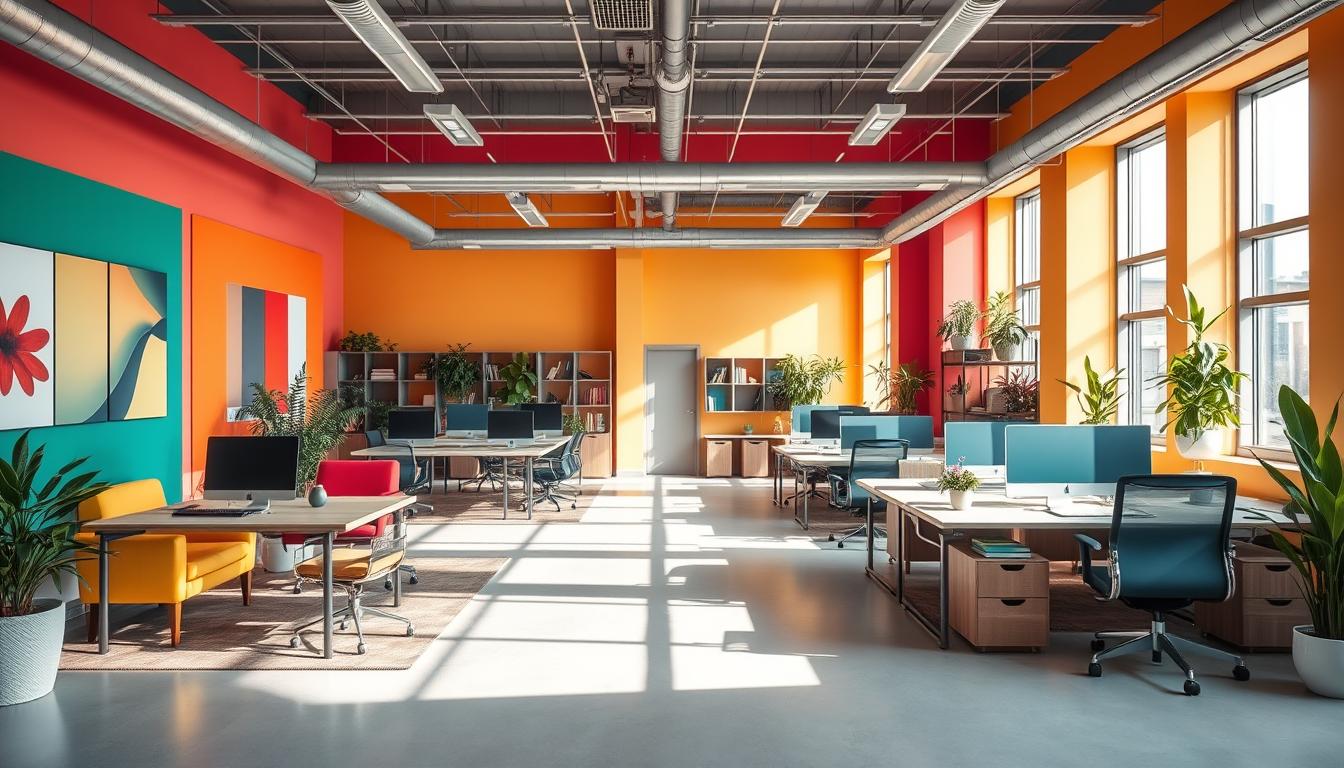
Colors match elements: green for Wood and creativity. Blue calms and brings clarity. White for Metal increases organization. Yellow brings optimism, and red fuels energy.
How to choose colors based on desired outcomes (focus, creativity, leadership)
First, decide on your main goal. For focus, choose cool blues and soft neutrals. For creativity, go with green and teal shades. To inspire leadership or energy, use red carefully.
- Analytical roles: start with blue, add white for structure.
- Creative teams: green with natural textures works well.
- Leadership spaces: use red sparingly on walls or decor.
Using color with intention: combining element goals and job function
Combine colors instead of just one. Use a main color with two supports and a neutral. For example, a marketing room might have green as the main, blue for focus, and white for clarity.
Room direction affects color choice. South rooms work with Fire colors. North spaces need Water and Metal tones. East or west rooms fit Wood and Earth. Match these with job roles to get the right feng shui vibe.
Add furniture and plants to mix elements. A walnut desk adds Wood energy. Metal fixtures and plants boost growth. This creates a balanced feng shui space.
Best Colors for Productivity and Focus
Picking the right colors can make you more focused and less tired. Colors that are practical help with thinking clearly and staying organized. Here are some color tips for places where you need to stay sharp and perform well.
Blue: calm, clarity, and concentration (Water element)
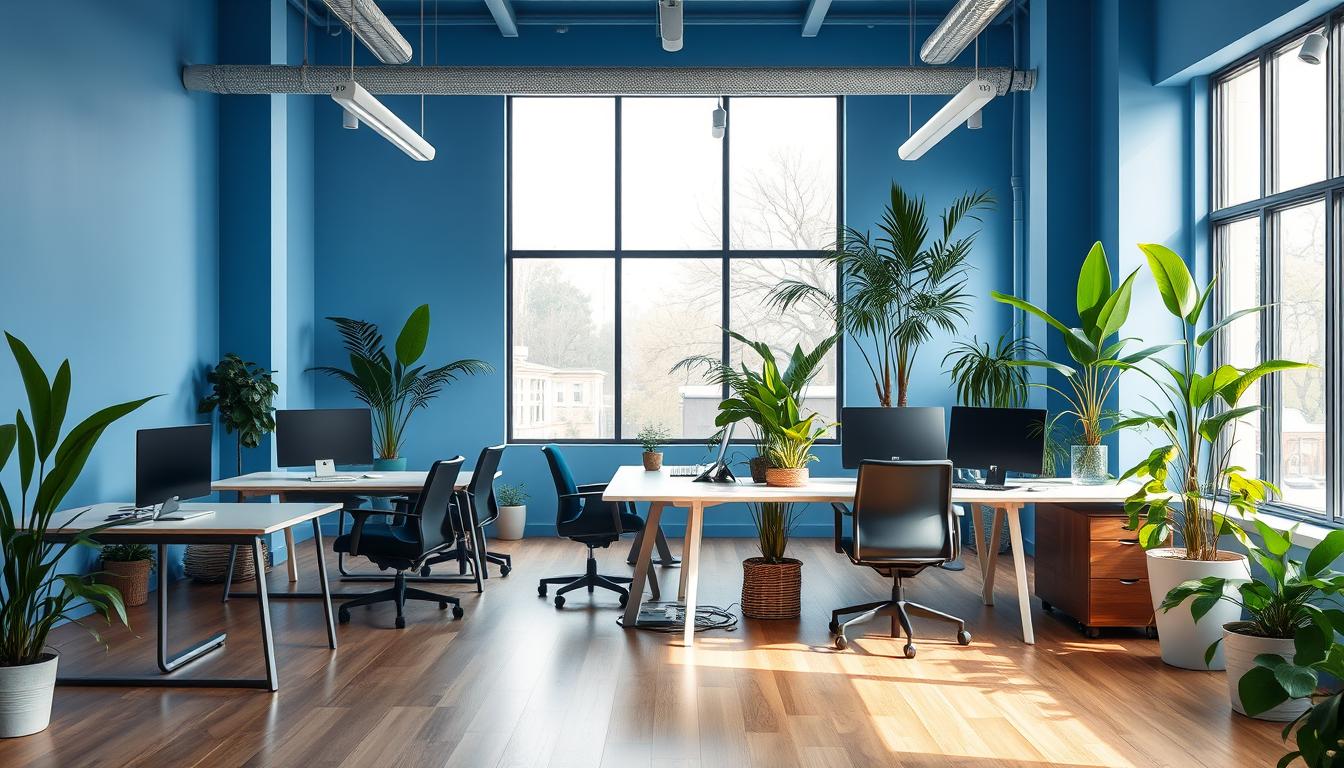
Blue helps with focus by bringing calmness and clear thinking, especially for jobs that need analysis. Light blues are soothing and good for jobs requiring long hours, like coding. Navy blue makes spaces feel stable and professional for meetings and calls.
Combine blue with white or light gray to keep things contrasted but not overwhelming. Rooms facing north do well with these cool, Water-linked colors. Putting desks near windows lets natural light enhance the blues.
White and gray: precision, organization, and Metal energy
White and gray, colors of the Metal element, are great for discipline and being precise. They’re good for law offices, finance teams, and places where details are crucial. White desks and gray storage help keep things uncluttered and easy to look at.
Add warm wood or textiles to avoid a cold look. In rooms that are north-facing or have little light, warm lights can make the space welcoming.
Ideal placements and accents for focus areas
Color accents in the office can help with focusing on important tasks. You can paint one wall behind the desk or a strip on the work surface for focus. Use lamps with warm LEDs to cut down on harsh lighting.
- Put desks near windows to use sunlight and positive energy.
- Keep primary work areas free of decorations to stay focused.
- Mix blues with Metal colors for a clear, organized look.
Using colors wisely, along with good lighting and neat spaces, can help keep your attention and lead to better work throughout the day.
Best Colors for Creativity, Growth, and Collaboration
Choosing colors for creative spaces influences team feelings and productivity. Thoughtful color choices can improve mood, ignite creativity, and help with long-term projects. It’s important to use colors intentionally to energize a space without overwhelming it.
Green: growth, renewal, and Wood element benefits
Green stands for life and balance, perfect for creatives like designers and writers. Use green by painting a wall sage or adding an emerald chair by a desk. This color helps startups thrive too.
Add live plants and wooden furniture to enhance the Wood element’s benefits. These items improve air quality and add a calming, restorative feel to any workspace.
Yellow: optimism, motivation, and Earth element warmth
Yellow boosts morale and sharpens the mind. It’s great for areas where teams come together, like meeting rooms. Soft yellow tones make a space welcoming, while bold yellow adds a burst of energy.
Use yellow in small doses, like on pillows or a single wall, to prevent overstimulation. This keeps meeting spaces comfy for longer durations.
How to use accents, plants, and textures to amplify creative energy
- Layer textures—rugs, woven shades, and felt panels—to balance yin and yang and improve acoustics.
- Introduce plants and natural fiber pots to strengthen green office color benefits and link interiors to the outdoors.
- Mix creative workspace colors like muted teal, warm ochre, and soft gray to form a cohesive, flexible palette.
- Place collaborative seating near natural light and orient color accents by room direction to reinforce intended energy.
Start with small changes to find the best mix before making big decisions. This approach lets you see what works best while keeping everyone on track and motivated.
Using High-Energy and Leadership Colors Carefully
Red and similar vibrant colors can enhance focus and boost ambition if used wisely. In office design, adding small splashes of color can uplift the mood without making the space too intense. Aim for accents that enhance the room’s purpose but don’t overpower it.
Red: power, passion, and Fire element—when to use red accents
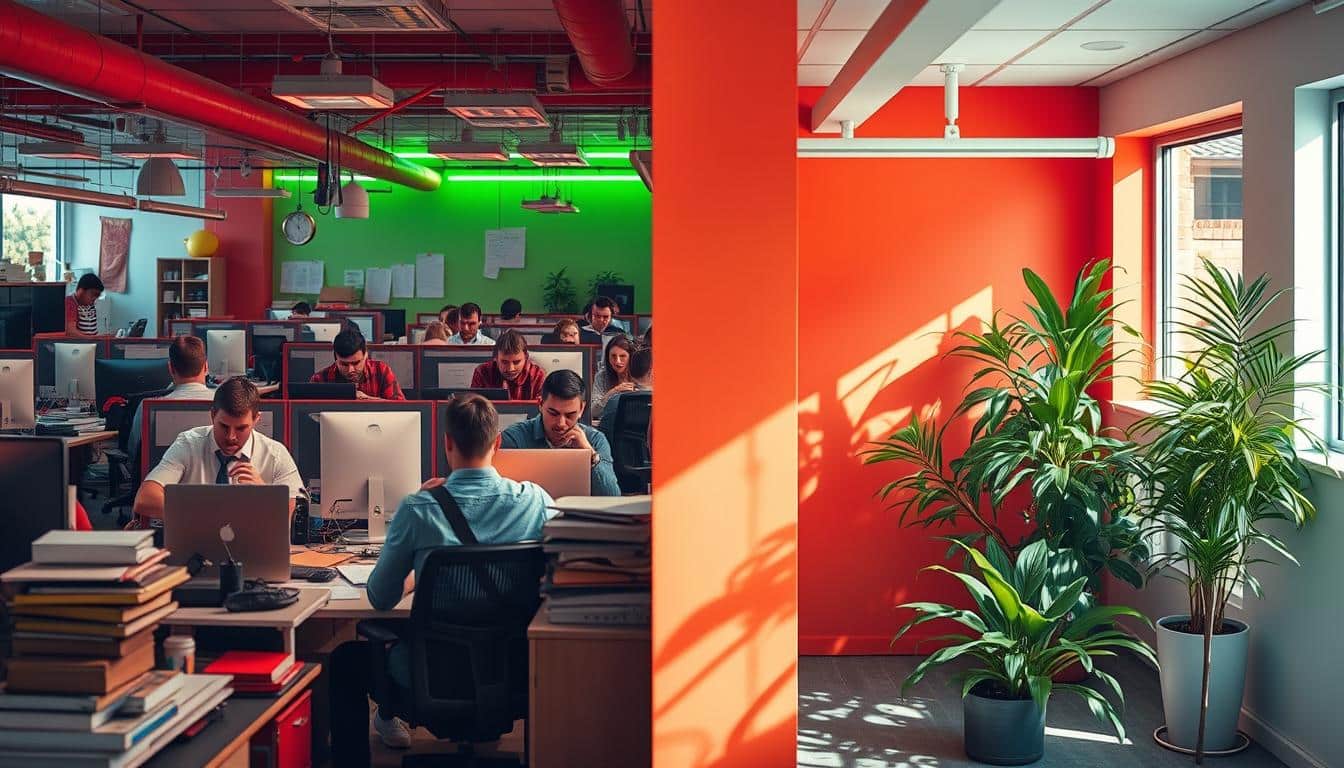
Red is a symbol of confidence, energy, and action. Entrepreneurs often add red touches to their spaces to increase motivation. Adding a red rug, some guest chairs, or artwork can introduce Fire energy without being too distracting.
Balancing high-energy colors with grounding neutrals and yin elements
Mixing red accents with neutral colors like beige, warm gray, or deep charcoal can soften their impact. Adding yin elements such as soft fabrics, plants, and water features helps calm the energy. Comfortable chairs and a solid wall behind the desk can also add stability to areas meant for leadership.
Examples: entrepreneur offices, meeting rooms, and leadership zones
- Entrepreneur offices: A single red accent chair or a small rug can add courage near the work area without becoming a distraction.
- Meeting rooms: Controlled red elements, like a lamp or artwork, can energize brainstorming sessions while the walls remain neutral.
- Leadership zones: Position the desk to command the room with supportive colors and subtle red details. Use wood, metal, or water elements to keep the energy calm and focused.
Before choosing intense colors, think about the room’s orientation. Some directions enhance Fire energy—use compass tips to place red items strategically. The goal is to balance vibrant colors throughout the area for clear and positive vibes.
Integrating Color with Feng Shui Layout Principles
Begin by positioning the work area according to Feng Shui basics. Then, add colors to the walls, accents, and lighting. This enhances the office’s vibe and productivity.
Command position and perceived authority
The desk should face the entrance but not be directly in front of it. There should be a solid wall behind it. To boost focus and authority, use colors like grounded neutrals, deep blues, or warm earth tones behind the desk. These shades provide a backdrop that helps steady the mind during key moments.
Desk placement, wall color, and natural light
Color choice for desk area should match the room’s lighting. For rooms facing north, choose warm or bright colors to balance the cooler light. In rooms with a lot of sunlight from the south or west, opt for greens and blues. They remain vibrant without overwhelming the space.
- Put desks near windows to use natural light and enjoy the view.
- Sheer curtains can reduce brightness without taking away light.
- Forget about fluorescent lights; warm LED lights are better for evening work.
Balancing yin and yang through color, texture, and lighting
To bring balance, combine soft colors with lively ones. Use light walls and cozy fabrics for calmness. Then add dynamic decor or sharp furniture for energy.
- Add plants and wooden elements for peace and natural feel.
- Metal features or bright pillows can spark energy.
- Use different textures to maintain interest and balance in the room.
By focusing on layout, color alignment, and balancing energies, your office can promote both hard work and innovation.
Practical Implementation: Choosing Paint, Furniture, and Accents
Begin by matching your color and material choices with the room’s purpose and direction. A mix of textures can enhance focus or creativity without overpowering the room. Even small touches, like an accent cushion or a plant, can change the room’s vibe more than repainting everything.
Selecting paint shades by room orientation and cardinal direction
- Start with a compass to identify the room’s direction. North-facing rooms do well with cooler, water-inspired blues. For south-facing rooms, pick warm reds and oranges that reflect Fire.
- Rooms facing east or southeast benefit from greens and wood tones, promoting growth. In contrast, west and northwest rooms look great with whites, grays, and metals.
- For paint, go with a soft neutral base and add an accent wall that aligns with the room’s direction. This keeps things balanced and avoids overstimulation.
Furniture finishes and desk materials that correspond to elements
- Opt for solid wood or walnut veneer desks for Wood energy and sturdy use. Rounded edges make them more comfortable.
- Choose metal frames or white desks to bring clarity and precision through Metal energy. Grey cabinetry also reflects this element.
- Support Earth’s stability with ceramic planters, stone accents, or beige upholstery. Water elements come through in dark blue cabinets or small water features.
- To stir Fire’s energy in areas of leadership, add red or orange lamps, rugs, or art. Also, pick ergonomic furniture from brands like Herman Miller or Steelcase for health and usability.
Small-office strategies: palettes for limited space and natural light
- Use light colors in small offices to make them feel open and bright. Pale blues, light greens, and warm off-whites are good choices.
- Amplify light with mirrors and metallic accents without adding clutter. Choose furniture that serves multiple purposes to save space.
- Keep work areas well-lit with task lighting. Stay away from harsh fluorescent lights. Use different lighting layers for comfort in the evening.
Air quality, plants, and décor that reinforce chosen colors and elements
- Improve air quality with plants like snake plants, pothos, or spider plants. They clean the air and add a touch of life aligned with Wood energy.
- Coordinate your planters and throws with your room’s color scheme. Using natural materials and art can help maintain calm and focus.
- An air purifier and living plants can make the air cleaner and help you concentrate better. Keep décor simple; pick images that bring nature inside and promote positivity.
Conclusion
Linking colors to the five elements in a feng shui office is key. This includes choosing the right paint, furniture, and accents. By selecting colors with purpose—blue for focus, green for growth, red for energy—spaces become more productive and inspiring. This way, an office color strategy becomes a powerful tool rather than just decor.
Modern feng shui combines color with smart layout, sunshine, fresh air, and keeping things tidy. By putting desks in the best spot, using finishes that help meet your goals, and adding plants or ways to clean the air, the colors you pick work even better. This full approach makes the office a better place to work.
To find balance, match colors with the room’s direction and what the job needs. Follow the rules of cardinal directions to pick the right colors so everything feels right inside and outside. Using your office color plan carefully will help blend workspace hues. It creates an environment that supports health, concentration, and leadership.
Content created with the help of Artificial Intelligence.