Poor lighting reduces focus and comfort. Many American offices deal with dim spots, glaring lights, or inconsistent lighting. These issues make working difficult. But you don’t need a big renovation to boost mood and productivity. Quick and easy lighting changes can make a big difference, without much cost.
This guide outlines handy office lighting tips. It talks about balancing different types of light. We’ll go over smart LED options, easy-to-add fixtures, dimmers, and motion sensors. These help save money and give more control over lighting. No matter if your office has windows or not, these tips can make your lighting much better, without a lot of fuss.
First, identify the main lighting problems: blinking bulbs, too-bright overhead lights, and dark work areas. Next, pick solutions like adjustable desk lamps, standing lamps, LED strips under shelves, and bulbs that mimic natural daylight. These upgrades can help fix lighting in any office space. They reduce glare and shadows, making it easier to see without straining your eyes.
Key Takeaways
- Good light boosts focus and comfort without major construction.
- Combine ambient, task, and accent lighting for balanced illumination.
- LEDs and full-spectrum bulbs save energy and mimic daylight.
- Plug-in and battery-operated fixtures deliver non-invasive lighting upgrades.
- Use dimmers and motion sensors to cut costs and add flexibility.
Assessing Your Office Lighting Problems
Begin by walking through your office to check the lighting. Look for areas that are too dark, too bright, or where the color seems odd. This will help you decide what needs fixing first.
Identifying common issues: dimness, glare, uneven lighting, color temperature
Dim areas can make you feel sleepy and less focused. Too much brightness can cause headaches. Notice if computer screens or shiny surfaces create annoying glare.
Check if light is uneven in large spaces or over desks. Notice if the light makes skin or objects look too yellow or too blue.
Measuring light levels and coverage with simple tools
Measure light with an app or a light meter in different areas. See how these numbers compare to what is recommended for offices.
Draw a map to see where light goes. Measure light at eye level and near the ceiling. This shows where light is too strong or missing.
How office layout, ceilings, and furniture affect light distribution
Notice how low or high ceilings affect light. Low ceilings work well with recessed lights. High ceilings may need hanging lights to reach desks.
See how furniture or shelves block light. Sometimes, adding small lights under shelves helps. Moving lights around might fix dark areas without new wiring.
How to Fix Poor Office Lighting Without Renovation
Begin with easy changes that boost comfort and work efficiency. Small, specific adjustments can tackle big issues without major disruptions. Mix simple replacements and smart setups for quick improvements.
Priority fixes versus cosmetic changes
-
First, fix glare and shadows. Get adjustable desk lamps and move overhead lights from computer screens.
-
Next, add dimmers or affordable smart bulbs where you need adjustable lighting. This focuses on upgrades that really help comfort.
-
Keep decorative lights for later. They look good but don’t usually fix lighting problems like dark spots or glare.
Combining approaches: task lighting, ambient layering, and accents
-
Create a base of soft light with floor lights or uplights. This evens out harsh light and shadows, making a good lighting foundation.
-
Put adjustable lights at each desk for specific tasks. Combine them with the soft light for evenly lit workspaces.
-
Add accent lighting with shelf or picture lights for extra detail. These lights bring the space together and spotlight important spots without new wiring.
Estimating costs and choosing the most cost-effective improvements
-
Count how many lights you need for each desk and area to figure out costs. Small lamps and LED strips are budget-friendly for brightening big spaces.
-
Include items like dimmers and smart bulbs for savings over time. They cost more at first, but LED use less energy, saving money later.
-
Think about using motion sensors in rarely used areas to save power. Plan for changing bulbs; LEDs last a long time but eventually need replacing.
Improve Task Lighting with Desk and Floor Lamps
Good task lighting helps you focus better and reduces tiredness. You should use adjustable fixtures that point light exactly where it’s needed. Matching bulbs and their placement to your task and the time of day makes a big difference. With just a few desk lamps and floor lamps, you can make your workspace better without needing to rewire anything.
Choosing adjustable lamps for desks and workstations
Choose lamps that you can easily adjust in angle and height. Look for task lights with adjustable arms or floor lamps that curve, giving you control over where the light goes. For small desks, try wall-mounted sconces or clamp-on lamps to save space.
Best bulb types and color temperature guidance
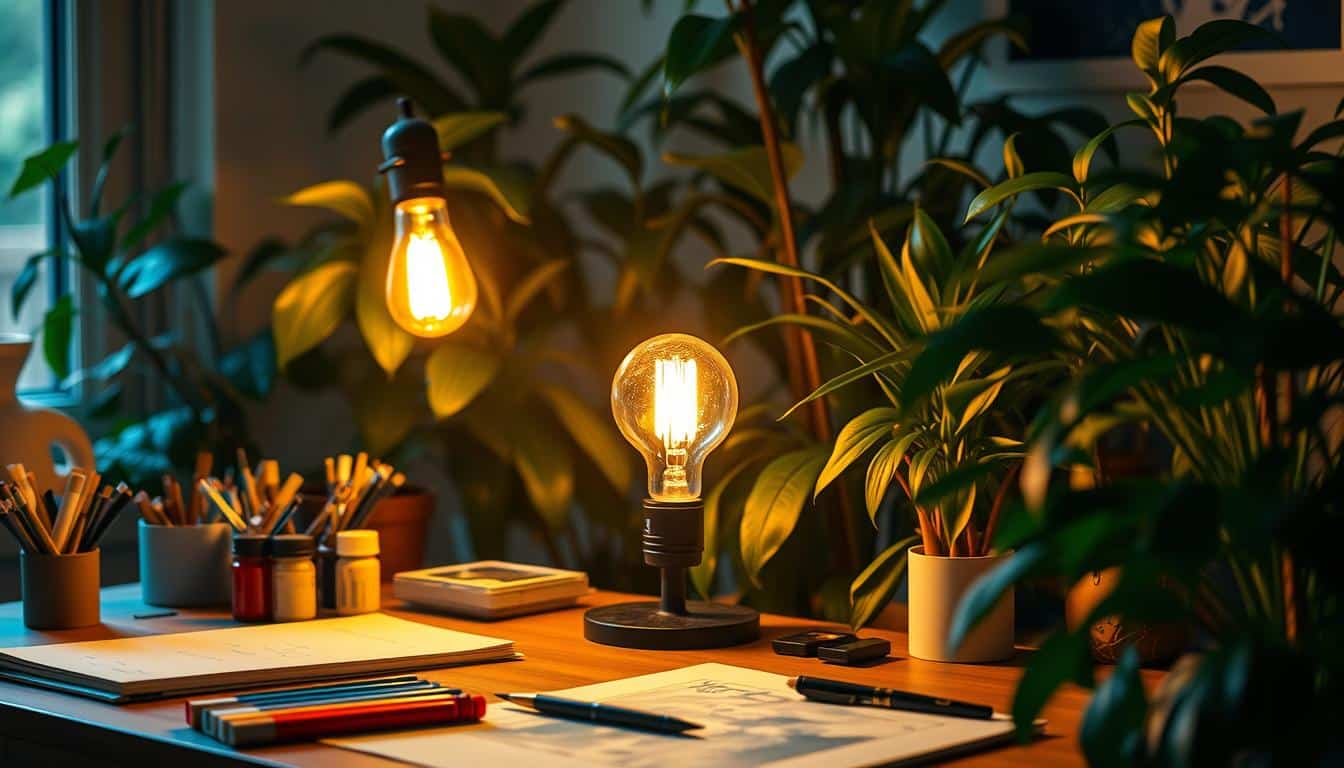
LED lights are great for offices because they save energy, last a long time, and dim smoothly. Pick full-spectrum or daylight LEDs for the best color view.
Use brighter, cooler light in the morning to help you wake up. Later, switch to softer, warmer light to relax. If colors need to be just right, get LED bulbs that let you adjust brightness and have a high color rating.
Placement tips to reduce screen glare and eye strain
- Put lamps on the opposite side of your writing hand to keep work clear of shadows.
- Direct light onto the desk, not the computer, to cut down on screen glare.
- Use lamp shades or diffusers to avoid glare from shiny screens.
- Always check your lamp’s brightness with your monitor on to make sure it’s comfortable, especially in shared spaces.
Use Indirect and Layered Lighting to Reduce Glare
Soft, bounced light makes offices feel more tranquil and gentle on the eyes. It lessens harsh light that can cause screen reflections and eye strain. Start by changing a few fixtures, no need for complex rewiring.
What indirect lighting does for comfort
Indirect lighting casts light onto ceilings or walls, scattering it gently around. This softens intense light spots and eases eye strain. Employees experience fewer headaches and feel less tired when light is soft and evenly spread.
How to add ambient light using plug-in fixtures and floor lamps
- Choose ambient light plug-in fixtures like torchiere floor lamps that point upward to bounce light off the ceiling.
- Use plug-in wall sconces where outlets exist to add even background light without installing new wiring.
- Consider battery-operated puck lights for shelves or inside cabinets to provide soft accent illumination.
Layering ambient, task, and accent light for balance
Blend general ambient light, specific task lamps, and accent fixtures for comfort. This mixture ensures no one light source is too overwhelming.
- Start with ambient light to evenly brighten the room and diminish harsh spots.
- Then, place adjustable task lamps at desks for focused light that doesn’t cause screen glare.
- Finally, use accent lights to enhance displays and add depth, maintaining low contrast.
Choose lamp shades wisely to manage light diffusion. Clear glass makes an area brighter, while milk glass or fabric shades offer a softer light. This strategy minimizes office glare yet keeps the area well-lit for work.
Bring in Natural Light or Simulate It Without Construction
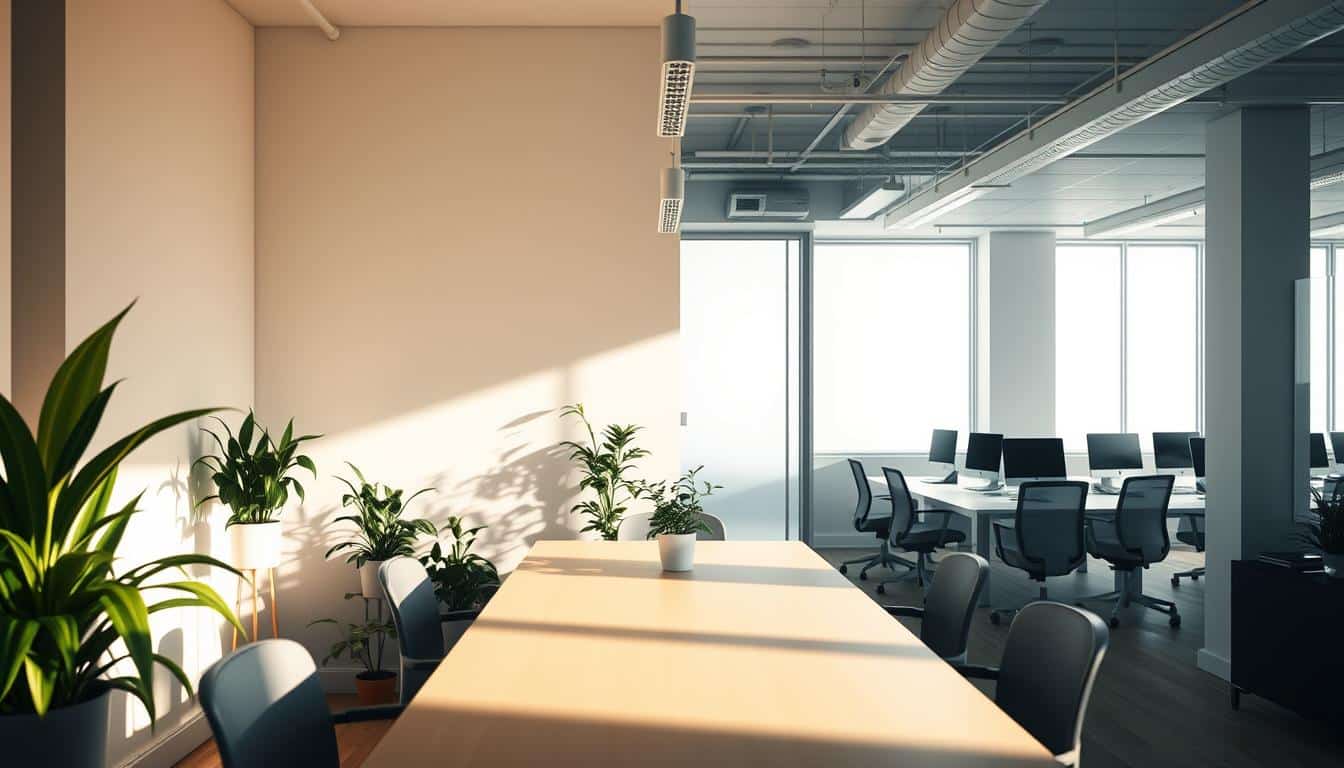
Natural light boosts your mood, sharpens your focus, and makes tiny offices seem bigger. Without changing the structure, you can change how light moves. Adjust window treatments, move furniture, and add shiny surfaces. These actions help sunlight reach further inside. For rooms without windows, certain lights and smart fixtures can create a daylight feeling. This makes people feel more awake and comfy.
Maximizing existing windows
Begin by installing blinds or shades you can adjust. This helps manage the bright glare while bringing in as much sunlight as possible. Rearrange desks to give workers light from the side. This prevents computer screens from washing out. Painting walls and picking low furniture can also increase light and reduce shadows.
- Angle desks towards the windows, making sure monitors face away from direct sunlight.
- Install sheer roller shades to soften strong sunlight without cutting off the light.
- Put mirrors or glass tables across from windows to reflect light into darker spots.
Simulating daylight in windowless spaces
In offices without windows, pick bulbs or LEDs that mimic daylight. Choose light fixtures that spread light well, like those with clear glass or hanging designs. Mix overhead lights with adjustable desk lamps to balance the light. This prevents dull and shadowy areas.
- Place full-spectrum bulbs overhead for a natural light feel across the room.
- Opt for LEDs you can adjust to change from cool to warm light as needed.
- Add small lights under shelves or battery-powered ones on tables to brighten desks without new wires.
Sunroom material alternatives and reflective decor
Use materials and decor that scatter light well to mimic a sunroom. Think about translucent panels, acrylic for spreading light, and glass details. Mirrors, shiny finishes, and metallic frames can make the most of the light available. Even simple things like whiteboards and light-colored rugs help reflect light, making your space seem brighter without needing more lamps.
- Choose light fabrics or acrylics for curtains to let sunlight through.
- Pick paint with a gloss or satin finish for trims to better reflect light.
- Use small mirrors to send light towards desks and work areas.
Smart Bulb Choices and Energy-Efficient Upgrades
Making your lighting better without new wiring is quick. It boosts comfort and lowers bills. Choose the right bulbs and setups for your work area and upkeep routine. Small tweaks lead to big savings with the right tech and color choice.
Advantages of LED over fluorescent: longevity, dimming, and energy savings
- LEDs are cooler and last way longer than fluorescent lights. They don’t need replacing as often, cutting down on waste.
- LEDs dim more smoothly than fluorescents. This makes adjusting light for different tasks easier and lessens eye strain.
- Switching to more efficient lights usually pays off in a few years. LEDs use less energy and don’t need to be replaced often.
Selecting the right color temperature for productivity and comfort
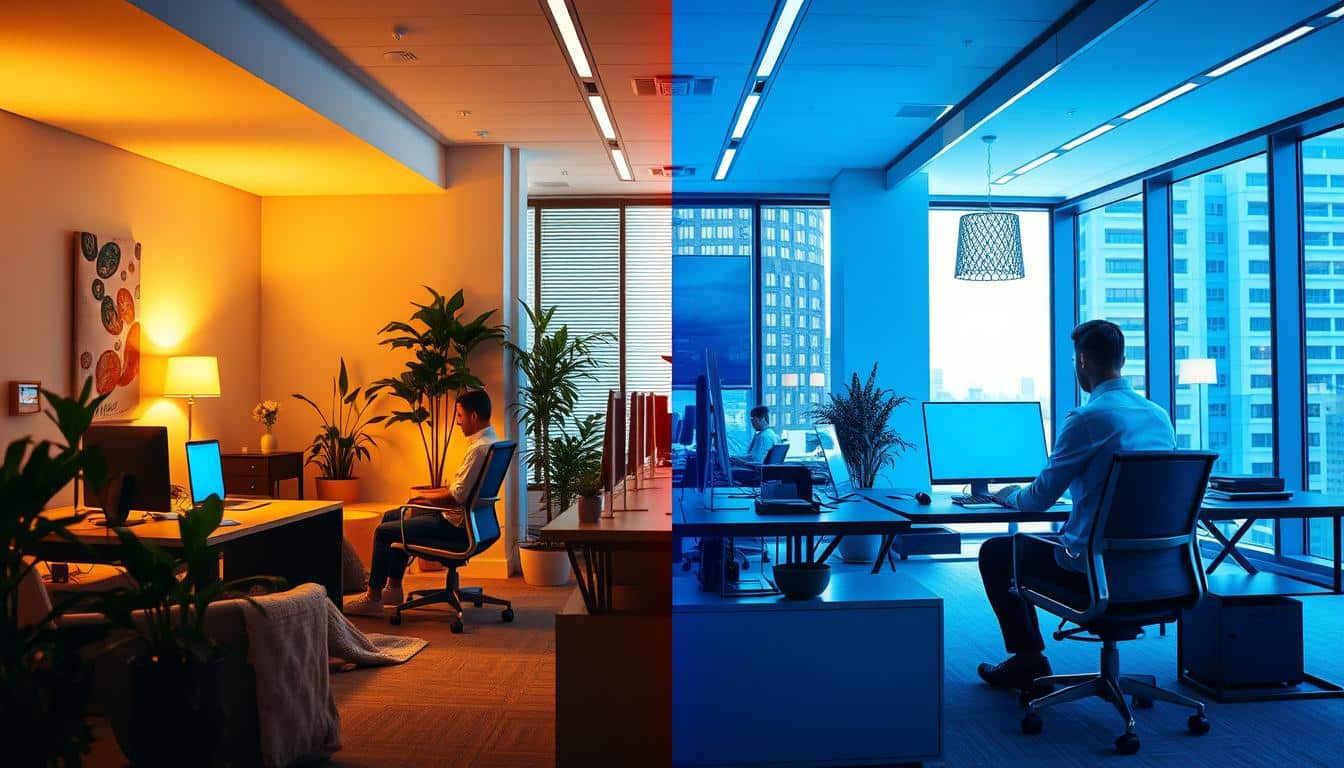
- The color temperature in an office can change how alert and how good your mood is. Cooler whites (around 4000K–6500K) are great for staying sharp during morning work.
- Using warmer lights (2700K–3500K) can relax your eyes in the evening. They’re perfect for rest areas.
- High-CRI LEDs show true colors, which makes looking at screens and printed stuff easier on your eyes.
Smart bulbs, dimmers, and motion sensors to cut costs and add flexibility
- Smart bulbs let bosses create lighting scenes and schedules for the office. This adjusts the light for different parts of the workday.
- Using dimmers and sensors helps save electricity. They keep lights off in unused rooms.
- Picking smart setups when switching to LEDs makes your lighting even more efficient. It’s easy to install, too.
Creative Non-Invasive Fixtures and Accent Lighting Ideas
Renovating an office isn’t always possible. But, you can still make a big change with smart lighting. Look for lights that are practical, save space, and follow rental agreements. Mixing useful lights with decorative ones can make a space more comfortable and stylish.
Plug-in wall sconces, battery puck lights, and under-shelf LED strips
- Plug-in wall sconces don’t need much space. They can light up an area or add a soft glow.
- Battery-operated lights, like puck lights, are great for lighting shelves and cabinets from inside. They’re easy to control too.
- LED strips under shelves light up work areas evenly. They’re good for counter tops and places where people work together.
Statement lamps, floor lamps, and decorative pendants that don’t require wiring
- Floor lamps with large arcs add light and become a room’s focus. Using LED bulbs can save energy.
- Table lamps made of glass or rattan change a room’s mood. The light depends on the bulb and lampshade you use.
- Pendant lights with a plug can hang from the ceiling. They add design without needing permanent installation.
Shelf, picture, and display lighting to improve ambience and highlight workspaces
- Picture lights brighten artwork and boards. Warm white bulbs keep colors true.
- LED strips behind shelves lower harsh light, making zones stand out.
- Motion-sensor and smart plugs offer easy, energy-saving lighting control.
Mixing practical and accent lighting helps set the mood. Try out placements with temporary hooks. Minor changes, like switching bulbs or fixtures, can improve comfort and look.
Conclusion
Start improving office lighting by using a detailed checklist. Look for glare, dark spots, and mismatched colors first. Focus on solutions that lessen glare and make lighting even in all working areas. Then, use different layers of lighting to meet various needs.
For quick changes, pick easy-to-install lights like plug-in sconces, adjustable desk lamps, and LED strips. Go for LED bulbs and those that mimic natural light for a cost-effective solution. Adding dimmers and motion sensors can make your lighting more versatile and cut down on bills.
Try different shades, bulbs, and spots in one area before updating the whole building. Make sure the lighting fits the room size and the tasks being done there. This way, you avoid too much or too little light. A simple plan and using the checklist can make the upgrade process smooth and budget-friendly.
Smart, small steps like using multiple lighting layers, LEDs that look like daylight, and automated controls can create a brighter workspace. These changes are great for tenants and companies looking to improve their space without heavy construction. They also help save on energy and maintenance costs.
Content created with the help of Artificial Intelligence.